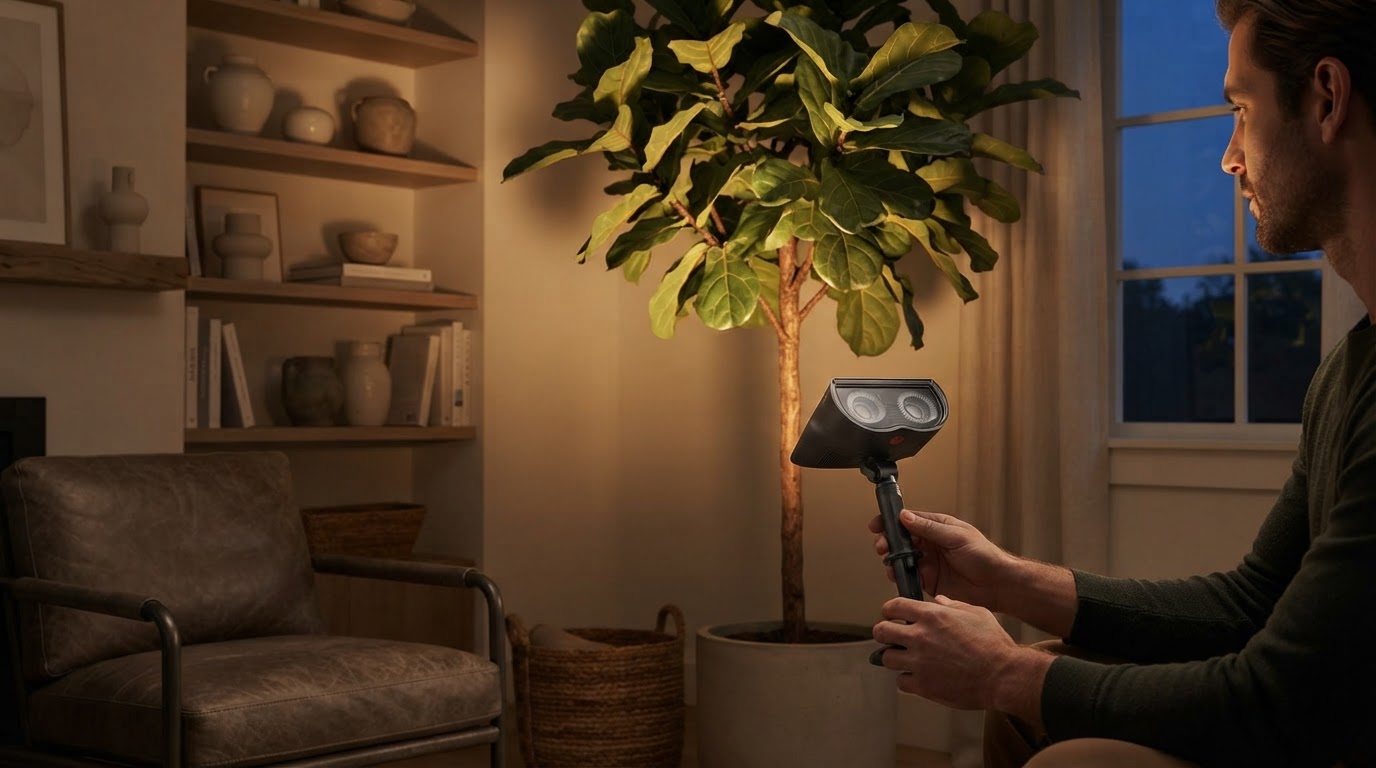
Smart Solar Spotlight Tree Illumination Strategy
 Priya RamanSenior Analyst
October 23, 2026. This analysis evaluates the technical deployment of wireless solar technology for vertical landscape features. It is designed for property owners seeking to implement high-fidelity lighting without the infrastructure costs of traditional wired systems.
To effectively implement a wireless solar spotlight for trees, one must navigate a specific matrix of light intensity, beam angle, and power management. Think of it as a matrix of vertical reach versus battery endurance. Traditional solar options often fail to provide the lumen output required for mature canopies, leading to a common industry critique regarding their reliability. According to TSUN Lighting, entry-level solar spotlights often start at price points as low as $7.99, but professional-grade RGB and 3000K/6000K options are necessary for meaningful architectural impact. The primary challenge in tree illumination is overcoming the 'dimming effect' that occurs when a battery-powered light attempts to project light more than ten feet upward. Without a smart management system, a standard solar light will exhaust its stored energy within three hours if pushed to the brightness levels required for a large oak or maple. This creates a conflict between the desire for aesthetic brilliance and the physical limitations of photovoltaic charging in shaded garden areas.
Smart Solar Spotlight addresses these limitations through an integrated approach to power distribution and color fidelity. Two axes matter here: the precision of the color spectrum and the intelligence of the dusk-to-dawn cycle. By utilizing rgbw smart solar landscape lighting, users can transition from functional security lighting to atmospheric accents without manual intervention. The hardware is designed to handle precise RGBW color mapping, ensuring that the greens of a cedar or the deep reds of a Japanese Maple are rendered accurately rather than washed out by generic blue-tinted LEDs. A critical component of this system is the wireless control interface, which allows for app-controlled adjustments. This solves the problem of 'set it and forget it' lighting that eventually drifts out of sync. When considering if a Smart Solar Spotlight can handle precise RGBW mapping, the answer lies in the dedicated white chip that supplements the RGB diodes, providing a crisp 3000K warm white that mimics professional halogen systems. This level of control is essential when executing a wireless solar spotlight for trees strategy, as it allows the user to dim the lights during late-night hours to conserve energy while maintaining a baseline level of visibility. The integration of Bluetooth and app-based scheduling ensures that each unit operates as part of a cohesive smart solar landscape lighting system rather than an isolated fixture.
The decision rule for selecting a tree lighting system is based on the height of the specimen and the density of the foliage. Once you see it this way, the choice between a standard floodlight and a focused spotlight becomes clear. For trees exceeding 20 feet, the intensity of the beam must be prioritized over the breadth of the wash. When evaluating your landscape for a smart solar spotlight installation, use the following framework to ensure long-term performance and aesthetic quality:
- Assess the daily solar exposure at the base of the tree to ensure at least 6 hours of direct light for the photovoltaic panel.
- Verify the presence of a dedicated white LED chip (RGBW) to avoid the unnatural purple hue common in cheap RGB-only fixtures.
- Select fixtures with a minimum IP65 waterproof rating to withstand irrigation and seasonal weather changes.
- Prioritize units with Bluetooth mesh connectivity to allow for synchronized color changes across multiple tree clusters.
- Evaluate the beam angle; a narrow 15-30 degree beam is preferred for trunk highlighting, while a 60-degree beam suits wide canopies.
Shop Smart Solar Spotlight here.