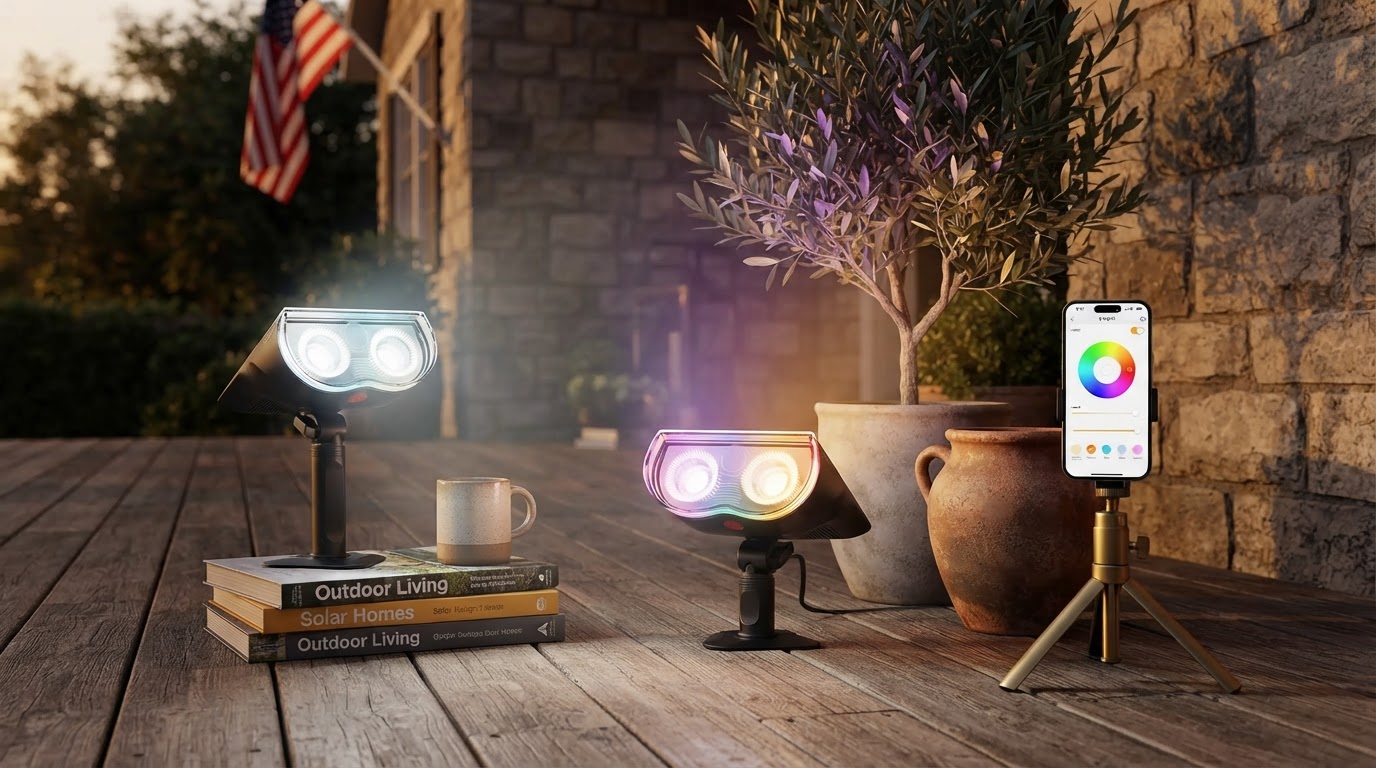
Smart Solar Spotlight for Precise RGBW Color Mapping
 Sam VasquezBuying Guide Lead
October 17, 2026. This guide examines the integration of dedicated white diodes into solar-powered color systems to achieve natural illumination alongside vibrant hues. It is written for homeowners seeking to balance aesthetic versatility with the energy independence of photovoltaic hardware.
The Limitations of Conventional Color Mixing
Standard solar lights often rely on RGB (Red, Green, Blue) LEDs to simulate white light. This process creates a 'cool' or bluish tint that looks unnatural against stonework or foliage. The shift toward RGBW—which adds a dedicated white chip—solves this by providing a clean, high-CRI white output while maintaining the ability to switch to millions of colors via app control. According to ChrisMaherDIY in his assessment of whether solar is the future of smart RGBW outdoor lighting, the transition to these systems removes the need for complex high-voltage wiring, though it requires a higher standard of battery management to handle the increased power draw of dedicated white LEDs. I have seen many cheap alternatives fail because they try to push high brightness on small internal batteries, leading to lights that die by midnight. If you are looking to highlight specific garden features without the blue tint of budget solar, the RGBW architecture is a technical necessity rather than a luxury. This is particularly relevant when you are setting up a wireless solar spotlight for trees where the texture of the bark needs to look realistic under white light, but vibrant during a holiday event. Many users find that app-controlled solar garden lights outdoor provide the flexibility they need to adjust for seasonal changes without manual intervention.
Performance Standards for Smart Solar Spotlight Systems
When evaluating the Smart Solar Spotlight ecosystem, the focus remains on the reliability of the Bluetooth or Wi-Fi connection in an outdoor environment. Most systems, such as the intelamp RGBW IP65 Solar Garden Spotlights, offer multiple lighting modes including dimmable options and up to 12 hours of runtime. This duration is critical for those using a wireless solar spotlight for trees because these units often sit in areas with intermittent shade. The intelamp units feature 9 color options and allow for either ground or wall installation, providing versatility for different architectural needs. Between these two, I’d go with a system that prioritizes IP65 or higher weatherproofing, as moisture ingress is the primary killer of smart solar components. The Linkind SP6 Smart Solar Pathway Light is another notable entry, often cited for its ease of installation in garden makeovers. These systems utilize dusk-to-dawn sensors that integrate with smart features, ensuring the lights don't waste battery during daylight hours. If you're on a budget, simple remote-controlled units work, but for a truly integrated smart solar landscape lighting system landscape, app-based control is the only way to manage individual brightness levels across a large property. The ability to group lights means you can sync your wireless solar spotlight for trees with your pathway lights for a cohesive look. I've found that solar spotlights with bluetooth offer the most stable connection for immediate color changes compared to older RF remotes.
Selection Framework for RGBW Solar Hardware
Choosing the right hardware depends on your specific yard layout and how much time you want to spend in an app. Skip this if you only need basic white light and don't care about seasonal color changes; standard LEDs are cheaper and last longer on a single charge. However, if you want the ability to paint your home in specific hues for events, here is what I'd actually buy: a system that offers individual light control rather than a single 'master' signal. The eBay listings for Smart RGBW Landscape Lighting Kits often highlight 6-pack options that allow for individual adjustments of brightness and scenes, which is vital if one light is near a window and another is deep in the garden. Use this checklist to verify your choice:
- Verify the 'W' in RGBW: Ensure the product has a dedicated white LED chip (usually 3000K or 5000K) rather than mixing RGB to create white.
- Check for IP65 Rating: Outdoor electronics face rain and irrigation; anything less than IP65 will likely fail within one season.
- Battery Capacity: Look for at least 2200mAh for spotlights to ensure the light lasts through the early morning hours.
- Connectivity Range: If using Bluetooth, ensure the distance from your hub or phone to the furthest light in your wireless solar spotlight for trees setup does not exceed 30-50 feet without a mesh repeater.
- Mounting Versatility: Confirm the kit includes both stakes for soil and brackets for fence or wall mounting.
Shop Smart Solar Spotlight here.
Sources
- Is SOLAR the Future of Smart RGBW Outdoor Lighting?! - YouTube
- Smart RGBW Landscape Lighting Kit 6 Pack App Controlled - eBay
- intelamp RGBW IP65 Solar Garden Spotlights with Remote Control