Can I DIY a Smart Solar Spotlight Hardscape System?
 Maya ChenContributing Editor
July 13, 2026 — Building a DIY smart hardscape system requires a centralized DC power hub rather than individual solar stakes to ensure reliable connectivity and consistent lumen output across masonry.
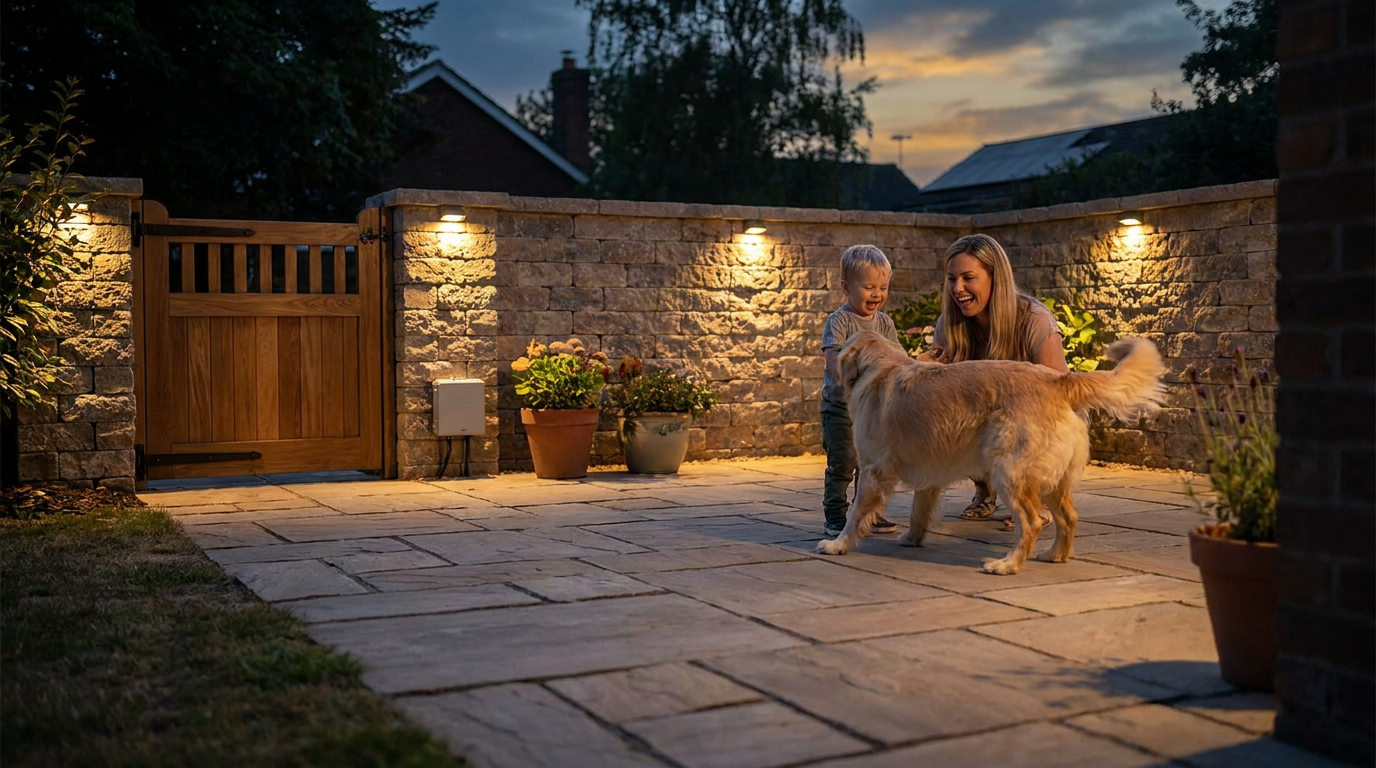
The conventional wisdom says that solar lighting is a plug-and-play solution for backyards, but this fails when applied to permanent hardscape features like retaining walls or stone pathways where individual panels are aesthetically disruptive or shaded. Integrating a Smart Solar Spotlight into a hardscape design involves shifting from retail consumer units to a component-based off-grid architecture.
How do you power a smart solar spotlight in a hardscape?
You must bypass individual integrated panels in favor of a single high-efficiency photovoltaic array connected to a 12V deep-cycle battery and a smart charge controller. Run the math: a standard 5-watt solar panel generates roughly 25-30 watt-hours per day in ideal conditions, which is insufficient for high-output smart fixtures that maintain a constant Bluetooth or Wi-Fi heartbeat. According to Green Builder Media, a viable smart solar controller can be installed for under $100 to manage excess energy from an existing panel and apply it to a single deep-cycle battery, creating a stable power reservoir that individual stake lights lack. This centralized approach allows for the use of more robust color changing solar spotlights that require consistent voltage to maintain their internal logic and wireless receivers.
Can smart solar spotlights be automated via DIY controllers?
Photo by JINU JOSEPH on Pexels
Automation in a hardscape setting is achieved by placing a smart DC relay or a photo-cell-equipped charge controller between the battery and the light fixtures. Here’s the part nobody talks about: most off-the-shelf solar lights are designed as closed loops, meaning you cannot easily integrate them into a broader smart home ecosystem without hardware modification. The DIY Solar Power Forum highlights that a fully solar-powered landscape system can function entirely on DC power, eliminating the energy loss associated with inverters. By using 12V DC smart switches, users can integrate their smart solar spotlight into platforms like Home Assistant or specialized apps. This setup supports advanced features such as rgb solar spotlights with app control, provided the controller can handle the specific pulse-width modulation required for color dimming.
Quick answers
Q: What basic components are needed for a DIY hardscape solar system? A: You require a solar panel, a 12V battery, a charge controller, and a photo cell, often available as affordable components from retailers like Harbor Freight according to community builders.
Q: Why avoid individual solar lights for hardscapes? A: Individual units often fail to provide the 12V stability needed for smart features and their integrated panels are difficult to orient for maximum sun exposure when recessed into stone.
Q: How much does a smart controller for these systems cost? A: A functional smart solar controller for managing landscape lighting can be integrated into a system for a hardware cost of under $100.
Q: Can these systems run without an inverter? A: Yes, keeping the system DC-powered is more efficient for LED spotlights and avoids the 10-15% energy loss typically seen with AC inversion.
I'll change my mind when integrated solar masonry lights offer user-replaceable batteries and standardized Zigbee or Thread connectivity that doesn't require a centralized hub.
Learn more about Smart Solar Spotlight at https://smartsolarspotlight.com.
Sources
Photo by suzukii xingfu on Pexels
- DIY Smart Landscape Lights: INSTALL & COSTS - YouTube
- Building an off grid landscape lighting system | DIY Solar Power Forum
- One Solar Panel To Rule All My Landscape Lighting ...