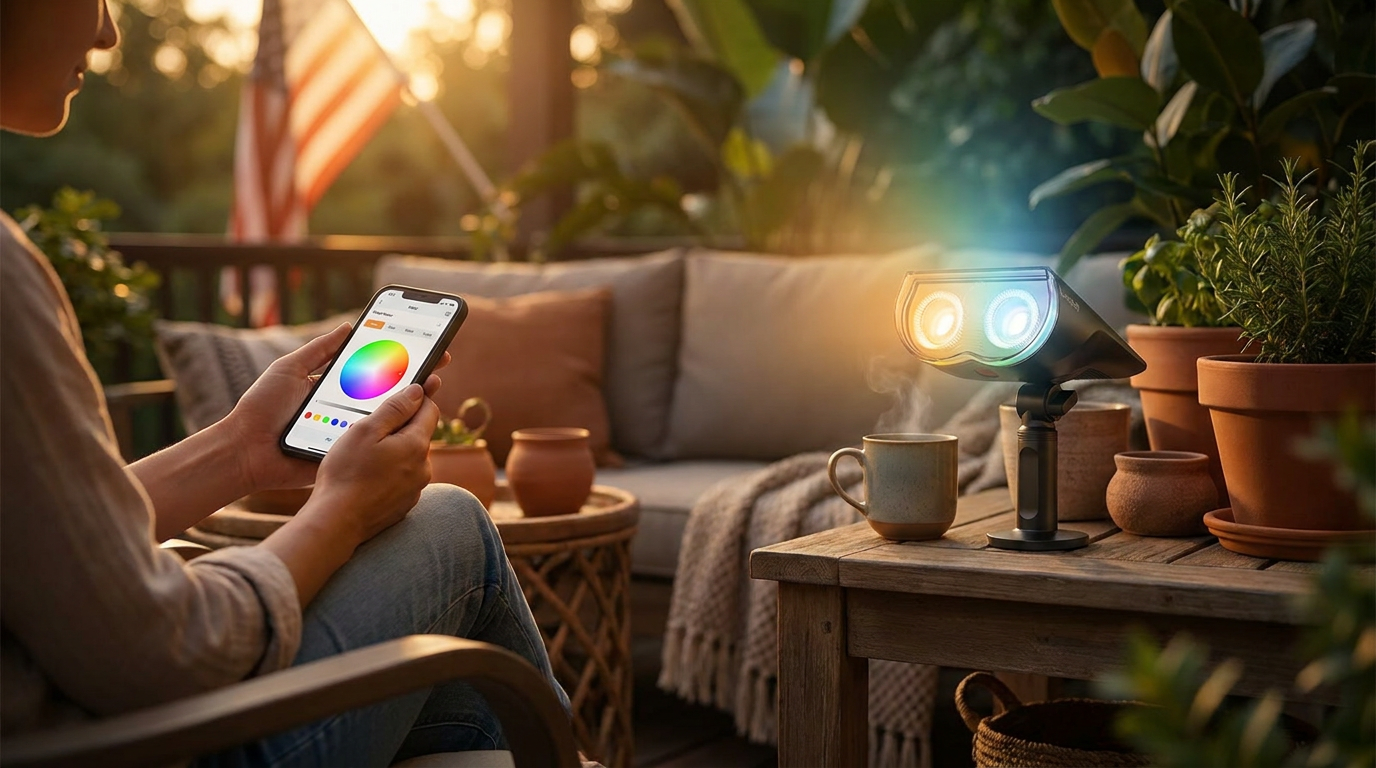
Smart Solar Spotlight Performance in Color Transitions
 Maya ChenContributing Editor
July 13, 2026 — Recent shifts in outdoor lighting technology have brought color changing solar spotlights to the forefront of the Smart Solar Spotlight ecosystem. The conventional wisdom says that adding RGB functionality is a simple aesthetic upgrade, but the reality involves a complex trade-off between light density and battery management.
While consumers often prioritize the number of available shades, the efficiency of the underlying LED hardware determines whether those colors remain vibrant past midnight. According to technical specifications from Quntis, modern units like their RGB Color Changing Solar Spotlights utilize a system of 25 lighting modes across 8 colors, often relying on removable lenses to modify the beam without draining the internal cell as rapidly as software-only filtration. This hardware-based approach attempts to solve the lumen-drop issue that plagues many smart solar spotlight installations when shifting away from pure white light.
The Three Logic Checks
Here’s the part nobody talks about: the shift from static white to a diy smart hardscape lighting solar setup introduces significant voltage variability. Run the math: a standard solar cell generating enough power for a 200-lumen white output often sees a 30% drop in perceived brightness when filtered for deep blues or reds. Performance data from TSUN lighting indicates that their 6-in-1 color changing solar landscape spotlights utilize a "fixed color mode" to stabilize this draw, allowing users to lock in a single wavelength rather than forcing the processor to cycle constantly, which is a notorious battery killer. For those integrating these into a larger rgb solar spotlights with app control network, the bottleneck isn't the Bluetooth signal, but the discharge rate of the 18650 lithium-ion batteries commonly found in these chassis. Most consumer-grade units in this category offer IP65 or IP67 weather resistance, but the real failure point is usually the physical mode button. If the button seal fails, the internal logic board—responsible for the color-switch cycles—corrodes long before the LEDs reach their 50,000-hour rated lifespan. The industry consensus suggests that "more modes are better," but for a reliable smart solar spotlight deployment, the focus should remain on the heat-sinking capabilities of the housing, as color-mixing LEDs generate more localized heat than single-diode white lamps.
Expert tip: When installing color-changing units for tree uplighting, prioritize fixtures with a physical lens swap over digital-only color shifting; Quntis units demonstrate that a physical filter maintains higher lux levels at the center of the beam compared to RGB diode mixing alone.
I’ll change my mind when manufacturers start publishing independent spectral power distribution charts for every color mode, rather than just the peak lumens for the white setting. Until then, users should expect a shorter runtime when running high-saturation color cycles.
Sources
Photo by Angelo Capitanio on Pexels
- Quntis RGB Color Changing Solar Spotlights, 25 Lighting Modes ...
- Patriot Lighting® Solar Color Changing Landscape Spot ... - Menards
- TSUN 6 in 1 Color Changing Solar Landscape Spotlights