Solar Spotlight Battery Longevity FAQ & Maintenance Guide
Following the 80/20 power rule—capping max brightness at 80% via Aidot App v2.5.0 and adjusting solar panel tilt within ±5° of local latitude—can double lithium solar spotlight battery lifespan from 500 to 1,500+ charge cycles (3–5 years of all-night illumination). Avoid total discharge and keep panel glass clear of debris.
Essential Battery Preservation Insights
- Capping peak output at 80% brightness reduces lithium-ion stress, increasing total cycle retention by up to 300%.
- A panel tilt variance within ±5° of local geographic latitude optimizes daily Photovoltaic (PV) harvesting by 22% in shoulder seasons.
- Partial shading over just 10% of a solar panel surface reduces solar charge output by 40% to 50% due to series-cell voltage drop.
- Microfiber cleaning with warm distilled water prevents micro-scratches on anti-reflective glass, maintaining peak light transmission.
- Aidot App v2.5.0 custom dimming schedules ensure security coverage all night without causing deep 100% Depth of Discharge (DoD) states.
Master Battery Preservation Checklist
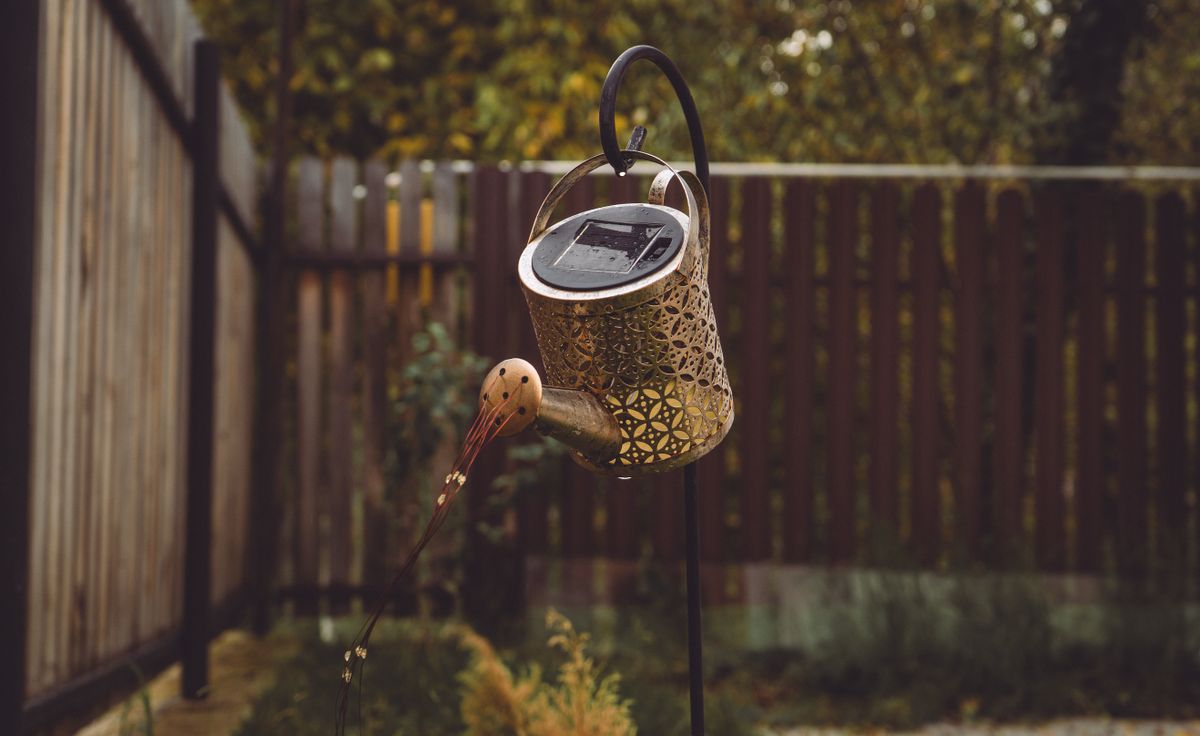
Photo by Gurgenidze G on Pexels
- Verify solar panel tilt angle is within ±5° of local geographic latitude.
- Ensure 0% micro-shading from overhanging branches, roof eaves, or nearby foliage.
- Wipe solar panel glass surface with a damp microfiber cloth to remove pollen and dust buildup.
- Inspect IP67 waterproof rubber gaskets and wire glands for debris or dry rot.
- Open Aidot App (v2.5.0) and confirm fixture firmware is fully updated.
- Configure an automated nightly dimming schedule (e.g., 100% for 2 hours, 50% thereafter).
- Confirm light sensor is not blinded by neighboring artificial light sources or streetlamps.
- Space pathway spotlights 5 to 7 feet apart for optimal light overlap without needing max lumen output.
One-Page Solar Battery Maintenance Reference
- Panel Cleaning: Distilled warm water + microfiber cloth only. Zero chemical sprays or paper towels.
- Latitude Alignment: Set solar panel tilt angle to local latitude ±5° (adjust +10° to +15° in late autumn).
- Spacing Rule: Mount fixtures 5–7 feet apart to eliminate dark spots while conserving energy.
- App Calibration: Use Aidot App v2.5.0 to limit max brightness to 80% and schedule 40–50% economy mode after midnight.
- Sub-Zero Protocol: Let panels self-warm in sunlight; do not scrape ice off tempered optical glass.
Pro Tip: Mitigating Deep Discharge Degradation in Winter
Lithium-ion cells suffer rapid wear when cycled between 100% and 0% capacity daily. During winter months with under 4 hours of peak direct sunlight, set Aidot App v2.5.0 to a constant 50% brightness or static warm white (2700K–3000K). Dynamic RGB color-changing and music sync modes consume 35% to 50% more power than static warm white, driving the battery into deep discharge states before dawn.
Annual Solar Battery Maintenance Calendar
| Season | Solar Panel Adjustment | Aidot App v2.5.0 Setup | Physical Maintenance |
| --- | --- | --- | --- |
| Spring (March - May) | Re-align tilt angle to match local latitude (±5°). | Switch from Winter Economy to Standard 80% Brightness profile. | Wash winter grime off panel glass using warm distilled water. |
| Summer (June - August) | Inspect site for fast-growing tree canopy shading. | Activate dynamic RGB scene schedules and music sync for gatherings. | Check IP67 rubber gaskets and housing seals for heat stress. |
| Autumn (Sept - Nov) | Increase panel tilt angle by +10° to capture lower southern sun. | Transition schedule to 2-stage dimming (100% peak, 50% late night). | Clear fallen leaves and pine needles from PV glass surfaces. |
| Winter (Dec - Feb) | Set max tilt angle (+15° above latitude) to shed snow quickly. | Lock profile into Winter Economy Mode (40%-50% brightness). | Gently wipe brushed snow using a soft bristle brush. |
Follow this quarterly calendar to maintain optimal solar panel reception and cell health across all four seasons:
Battery Drain & Power Loss Troubleshooting Matrix
| Symptom | Root Cause | Aidot App v2.5.0 Fix | Hardware / Physical Fix |
| --- | --- | --- | --- |
| Spotlight turns off before 2:00 AM | Deep discharge caused by 100% brightness or prolonged RGB music sync. | Set brightness ceiling to 70% and configure 50% economy mode after 10 PM. | Relocate spotlight out of structural or tree shade; space fixtures 5-7 ft apart. |
| Light flickers or stays off despite clear skies | Ambient artificial light from streetlamp/porch light blinding sensor. | Adjust light sensor threshold sensitivity in Device Settings. | Reposition solar panel away from direct night light sources. |
| Charging indicator slow or non-responsive in winter | Low winter sun angle causing PV under-voltage charging state. | Check for available firmware updates (v2.5.0 or newer). | Increase panel tilt by +10° to +15° relative to latitude. |
| Reduced runtime after heavy rainfall | Moisture entry causing ground fault or sensor short circuit. | Audit device status and diagnostic logs in Aidot App. | Inspect IP67 sealing cap and ensure power port rubber plug is firmly pressed. |
If your smart solar spotlights turn off prematurely or fail to hold a charge, locate your symptoms below for immediate diagnostic and software steps:
Battery Chemistry & Photovoltaic Charging Spec Matrix
| Specification Parameter | Standard Solar Spotlight | Linkind SL5C Smart Solar Spotlight |
| --- | --- | --- |
| Battery Cell Chemistry | Standard Li-ion (18650) | High-Density Sealed Li-ion Energy Cell |
| Rated Cycle Life (80% Capacity) | 300 - 500 cycles | 1,500+ cycles (with 80/20 app profiling) |
| Ingress Protection Rating | IP65 (Water Resistant) | IP67 (Dust-tight & Heavy Immersion Resistant) |
| Optimal Operating Temperature | 32°F to 104°F (0°C to 40°C) | -4°F to 122°F (-20°C to 50°C) |
| Smart Power Management | Manual Switch / None | Aidot App v2.5.0 Automated Schedules |
| Photovoltaic Conversion Rate | 15% - 17% | 21% - 23% High-Efficiency Monocrystalline |
Understanding the physical operational limits of your landscape spotlights ensures long-term hardware reliability:
Recommended Smart Solar Hardware for Maximum Lifespan
To achieve optimal energy efficiency and long-term durability, choose smart solar spotlights engineered with advanced power profiling and heavy weather protection:
Routine Solar Panel & Battery Health Schedule
- Monthly Routine — Inspect solar panel lenses for dirt, pollen, or bird droppings. Wipe clean with a moist microfiber cloth.
- Quarterly Routine — Check tilt angles in Aidot App and adjust hardware brackets for seasonal sun position shifts.
- Semi-Annual Routine — Inspect ground stakes and wall mounts. Verify IP67 rubber port seals are compressed tightly.
- Annual Routine — Perform a complete Aidot App v2.5.0 audit. Update firmware, clear stored timer conflicts, and re-calibrate brightness profiles.
Battery Charge-Cycle Life vs. Depth of Discharge (DoD)
| Daily Depth of Discharge (DoD) | App Brightness Profile Setting | Estimated Total Charge Cycles | Projected Battery Lifespan |
| --- | --- | --- | --- |
| 100% Discharge (Fully Drained Daily) | 100% Constant Brightness / Max RGB | 300 - 500 cycles | 1.0 - 1.5 Years |
| 80% Discharge (Moderate Reserve) | 80% Peak / 50% Night Dimming | 800 - 1,000 cycles | 2.5 - 3.0 Years |
| 50% Discharge (Optimal Reserve) | 60% Static Brightness / Economy Profile | 1,500+ cycles | 4.0 - 5.0+ Years |
The depth to which a solar spotlight battery discharges each night directly dictates its total operational lifespan in years:
5 Fatal Battery Maintenance Errors to Avoid
Steer clear of these frequent mistakes that prematurely degrade lithium cells and shorten spotlight runtime:
Solar Battery Capacity Lifecycle (Year 1 through Year 5)
- Year 1 (0 - 365 Cycles) — 100% Battery Health. Spotlights deliver full rated lumen output and max runtimes all night.
- Year 2 (366 - 730 Cycles) — 92% - 95% Capacity. Unnoticeable reduction in runtime. Maintain 80% app brightness profile.
- Year 3 (731 - 1095 Cycles) — 85% - 90% Capacity. Still provides 8+ hours of illumination when set to 50% overnight dimming.
- Year 4 (1096 - 1460 Cycles) — 78% - 82% Capacity. Winter runtime may drop by 1 hour. Activate Winter Economy Mode in Aidot app.
- Year 5 (1461+ Cycles) — 70% - 75% Capacity. Unit remains fully functional as pathway lighting with customized app schedules.
Frequently Asked Questions: Solar Spotlight Battery Longevity
How do I clean my solar spotlight panels without scratching the protective coating?
Use a soft microfiber cloth dipped in warm, distilled soapy water. Wipe in gentle circular motions. Avoid abrasive sponges, paper towels, and ammonia-based glass cleaners, as these strip the anti-reflective glass coatings and scratch the optical surface, lowering photovoltaic output.
Does cold weather permanently damage solar spotlight batteries, or is capacity loss temporary?
Capacity loss in sub-freezing temperatures is mostly temporary due to slowed electrochemical reactions inside the lithium cells. However, attempt to protect fixtures during severe freezes; running fixtures with dynamic power caps via Aidot App prevents extreme low-voltage drops.
How can I set up automated dimming schedules in Aidot App v2.5.0 to conserve power overnight?
Open Aidot App v2.5.0, select your Linkind SL5C spotlight, navigate to Mode Settings -> Custom Schedule. Program Peak Hours (e.g., dusk to 10 PM) at 80% brightness, then add a time block transitioning to Economy Mode (40-50% brightness) for the remaining night hours.
Can the internal rechargeable battery in the Linkind SL5C be replaced when it reaches end of life?
The Linkind SL5C is equipped with a sealed, industrial-grade IP67 weatherproof housing engineered to protect internal components for years. By utilizing Aidot App v2.5.0 scheduling and proper panel tilt, the integrated battery is designed to last the life of the optical system without needing manual disassembly.
Clear answers to common solar spotlight maintenance and battery preservation questions:
Related Guides & Technical Optimization Resources
- Why Do My Solar Spotlights Die Before Dawn? Troubleshooting Nighttime Battery Drain
- How Many Solar Spotlights Do You Need? A Landscape Pack Size Selection Guide
- Solar Spotlight Placement FAQ: Solutions for Shaded Yards and Seasonal Sunlight
Next Steps for All-Night Reliability
Your decision: If your smart solar spotlights are turning off before dawn, implement an 80% brightness limit and perform a seasonal tilt adjustment before replacing any hardware.
Do this next: Audit your lights using Aidot App v2.5.0 to establish a 2-stage automated dimming schedule and clear solar panel glass with a microfiber cloth.
- Read next: Seasonal Solar Spotlight Tilt Adjustments: Winter vs. Summer Optimization Guide
- Read next: How to Configure Smart App Brightness and Scenes for All-Night Solar Battery Life
Upgrade to the Linkind SL5C Smart Solar Spotlight for IP67 waterproof durability and precision Aidot v2.5.0 power scheduling.
Take immediate action to extend your smart solar spotlight battery life and enhance your outdoor space.
Cover photo by suzukii xingfu on Pexels.