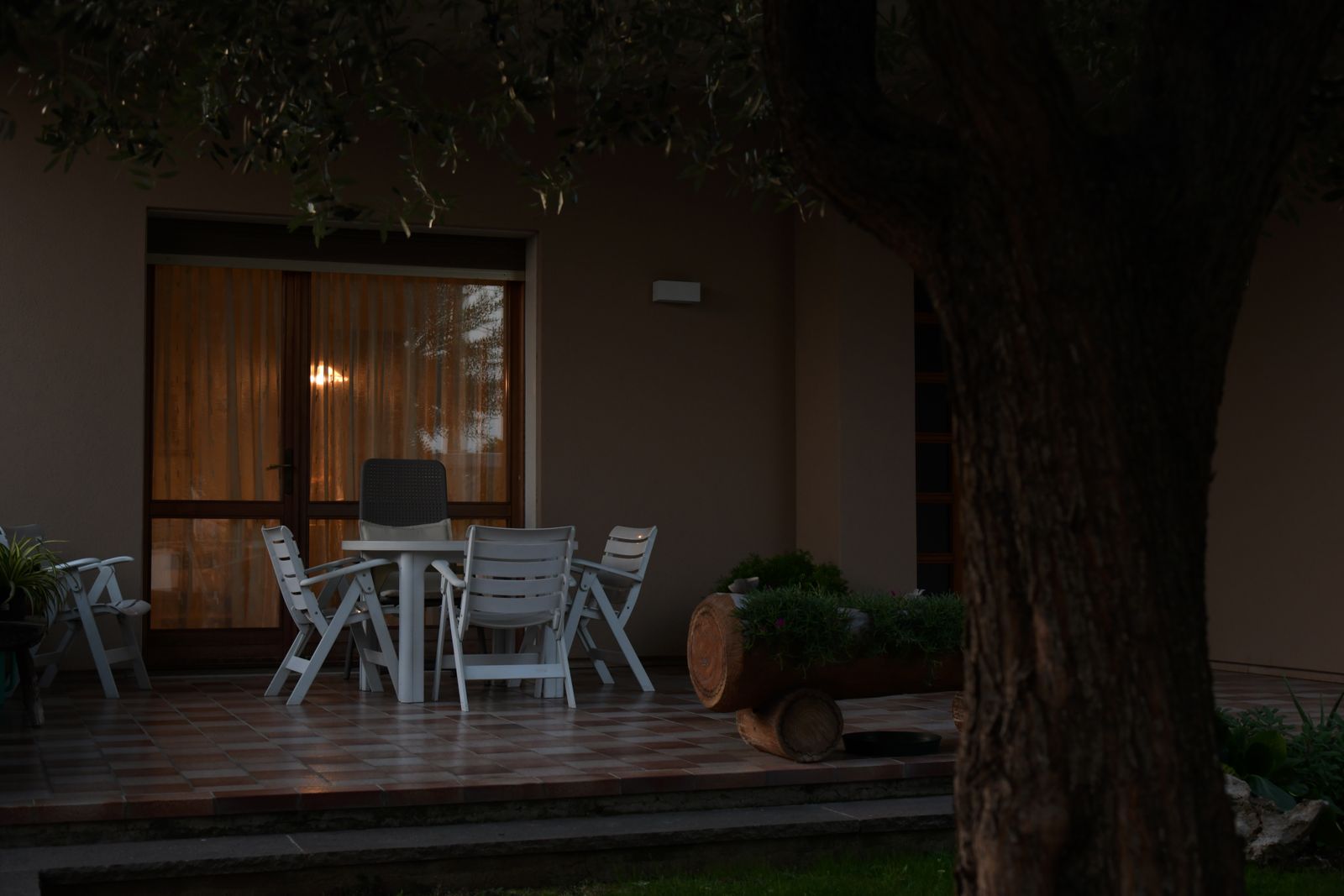
Warm White vs. Cool White Outdoor Lighting: How to Choose the Right Kelvin for Your Yard
Should you choose warm white or cool white outdoor lighting? For red brick, natural timber, and entertaining areas, select warm white (2700K–3000K) for a welcoming glow. For dark slate, modern white stucco, and perimeter security, select cool white (4000K–5000K). To eliminate guesswork, install tunable RGBTW smart solar spotlights that adapt across the full color spectrum via app schedules.
Warm White vs. Cool White: Scenario-Based Kelvin Comparison
| Outdoor Scenario | Warm White (2700K–3000K) | Cool Neutral (3500K–4000K) | Daylight Cool (5000K–6500K) | Optimal Smart Preset |
| --- | --- | --- | --- | --- |
| Red Brick & Natural Timber Facades | Enhances rich earth tones; soft, architectural elegance | Muted depth; appears slightly stark on red hues | Washes out brick tones into an unnatural grey tint | 2700K Warm White at 80% Brightness |
| Evergreen Shrubs & Blue Spruce Foliage | Makes greenery appear slightly yellowish or olive | Preserves true chlorophyllic greens and crisp needle texture | High contrast blue-green tint; stark leaf definition | 4000K Neutral White with 100% CRI rendering |
| Concrete Pathways & Staggered Walkways | Cozy, hospitality feel; low glare for evening walks | Clear contrast along stone edges without harshness | High visibility; can feel like a public commercial walkway | 3000K Warm White spaced 5–7 ft staggered |
| Perimeter Fence Security & Driveway Gates | Relaxed visual field; lower motion contrast at night | Balanced clarity; sharp shadow outlines for camera feeds | Maximum lumen perception; ultra-crisp intruder detection | 5000K Daylight Cool triggered by security schedules |
| Outdoor Living Spaces & Patio Seating | Inviting atmosphere; low bug attraction in lower blue spectrums | Functional task lighting for outdoor cooking areas | Harsh glares; draws nocturnal insects into gathering spaces | 2200K–2700K Sunset Ambiance Scene |
Evaluating how specific outdoor surfaces and functional zones react to different Kelvin temperatures prevents costly visual errors.
Failure Modes & Architectural Trade-offs

Photo by Alexas Fotos on Pexels
Pros
- Warm White (2700K–3000K) creates a relaxing, resort-like atmosphere on decks and patios.
- Warm spectrums emit fewer blue wavelengths, attracting significantly fewer nocturnal insects.
- Cool White (4000K–5000K) maximizes facial recognition and object definition on security cameras.
- Tunable RGBTW smart spotlights remove temperature locks, offering 2700K–6500K flexibility in a single fixture.
- FAILURE MODE: Applying 5000K daylight white to red brick or warm timber produces a sterile, parking-lot aesthetic.
- FAILURE MODE: Over-lighting Japanese maples or deciduous trees with 5000K causes leaves to appear bleached and unhealthy.
- FAILURE MODE: Illuminating perimeter security with exclusively 2700K warm light reduces contrast and depth perception along dark property boundaries.
- FAILURE MODE: Fixing static color temperature bulbs prevents adapting your lighting between quiet dinners and active security modes.
Expert Tip: Balancing Color Rendering Index (CRI) with Kelvin
When selecting outdoor LED spotlights, Kelvin rating is only half the visual equation—Color Rendering Index (CRI) dictates how vividly colors appear. Standard outdoor LEDs often carry a low CRI rating of 70, which causes vibrant autumn foliage and brick textures to look muddy regardless of whether you choose 2700K or 5000K. Always select high-CRI fixtures (CRI ≥ 80) paired with tunable RGBTW engines. This ensures that when you illuminate a Japanese maple at 3000K, the deep reds remain vivid, and when you uplight a blue spruce at 4000K, the silvery foliage renders accurately without color distortion.
Landscape Element Kelvin Selection Flowchart
- Is the primary purpose of the light zone security deterrence or architectural aesthetics? → Yes: Select 4000K–5000K Cool White for high-contrast clarity and camera recording precision.. No: Proceed to evaluate surface materials and natural features.
- Are you illuminating warm materials like red brick, natural cedar, or sandstone? → Yes: Use 2700K–3000K Warm White to accentuate natural wood grains and earthy terra cotta hues.. No: Proceed to foliage and modern architectural surfaces.
- Is the feature a dark slate wall, modern white stucco, evergreen conifer, or water feature? → Yes: Deploy 3500K–4000K Neutral Cool White for crisp, architectural contrast without color shift.. No: Opt for a tunable RGBTW smart solar spotlight to adjust between 2700K and 6500K dynamically.
Key Takeaways for Outdoor Color Temperature
Keep these principles in mind when planning your outdoor lighting layout:
Decision Support: Selecting Color Temperature by Zone
Match fixture kelvin capabilities directly to the surface material reflectivity and functional goals of each outdoor zone.
Best choice for
- 2700K Soft Warm White — Mimics atmospheric candlelight, reduces eye strain, and keeps insect presence to a minimum.
- 4000K Cool Neutral White — Brings out true chlorophyllic green and silver tones without shifting colors toward yellow.
- 5000K Daylight Security White — Provides maximum contrast for security cameras and immediate detection of movement.
- Avoid using 5000K cool white light on historical brick or rustic wooden pergolas.
- Avoid placing 2700K warm lights directly in front of security cameras covering long distances.
- Avoid mixing different fixed color temperatures on the same contiguous building facade.
- Tunable RGBTW Smart Solar Spotlights — Allows you to change temperatures dynamically via app control, eliminating fixed color limitations entirely.
Recommended Solution: Linkind SL5C Smart Solar Spotlight
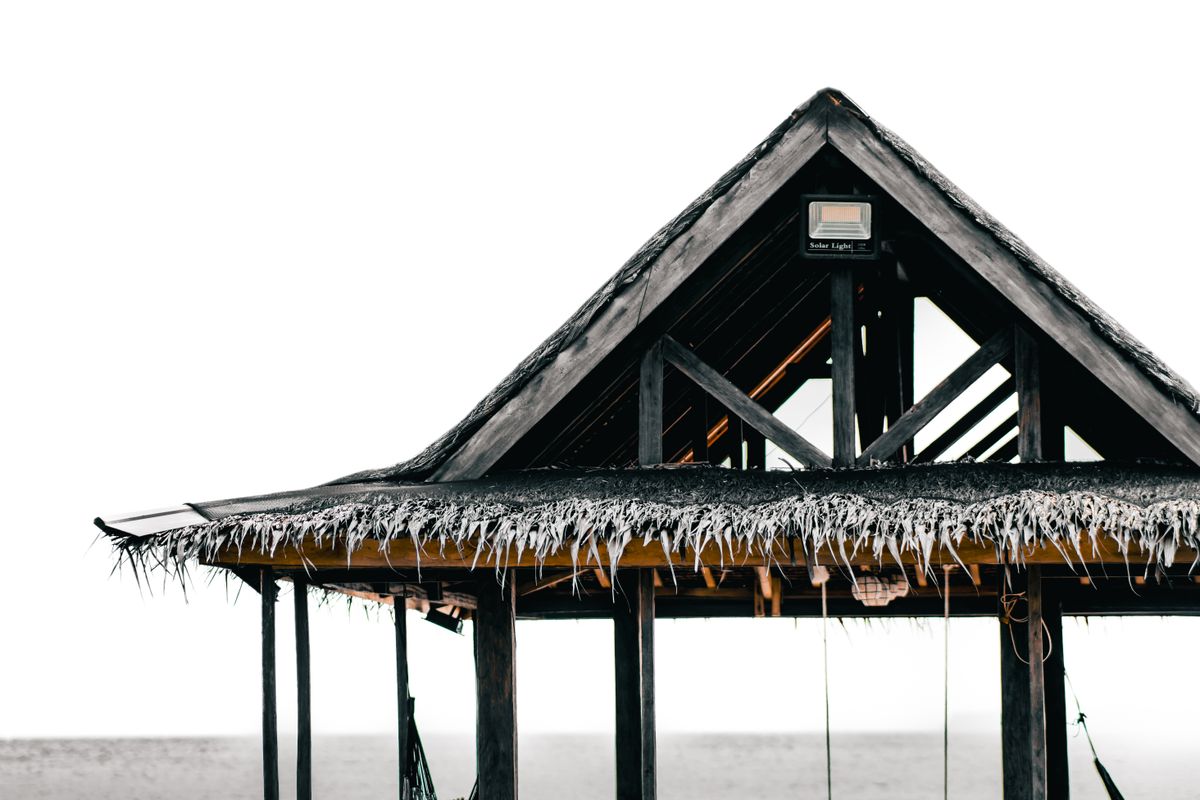
Photo by Jeric Turga on Pexels
The Linkind SL5C Smart Solar Spotlight solves the warm vs. cool dilemma by integrating full RGBTW color-tuning capabilities into an eco-friendly, solar-powered fixture. Controlled seamlessly through the Aidot App (version 2.5.0), you can adjust color temperature from 2700K warm ambient glow up to 6500K daylight white, create custom scene transitions, and sync lighting to evening music.
Key Technical Highlights:
- Full Spectrum CCT Tuning: Seamlessly slide between 2700K and 6500K plus millions of RGB colors.
- IP67 Waterproof Rating: Built to withstand torrential rain, snow, and severe weather.
- Zero Energy Cost: High-efficiency solar panels eliminate hardwiring and electric bills.
- Smart Control via Aidot App (v2.5.0): Schedule color shifts automatically based on time of day.
- Optimal Charging Performance: Feature adjustable solar panel mounts designed for a ±5° tilt relative to local latitude in the Northern Hemisphere.
Real-World Material & Plant Lighting Scenarios
Uplighting a Red Oak Tree and Cedar Siding — Set fixtures to 2700K warm white. The golden undertones enrich the red bark and natural cedar grains, producing a soft, inviting architectural silhouette.
Illuminating Modern White Stucco with Dark Slate Trim — Set fixtures to 4000K cool white. Crisp neutral light maintains clean architectural lines without adding unwanted yellow discoloration to pristine white surfaces.
Guiding Guests Along a Flagstone Walkway — Set staggered path spotlights to 3000K warm white at 5–7 foot intervals. This eliminates harsh shadows and provides safe, low-glare footstep guidance.
Securing a Dark Rear Property Perimeter — Set solar spotlights to 5000K daylight white on motion triggers or scheduled night routines. The high color temperature maximizes security camera shadow definition.
Examine how specific exterior elements react when paired with appropriate color temperatures.
Understanding the visual impact of outdoor color temperature requires looking at how human vision interacts with light spectra at night. Under scotopic (nighttime) vision conditions, the human eye becomes increasingly sensitive to blue-green wavelengths. This phenomenon, known as the Purkinje effect, explains why cool white light (4000K–5000K) appears visually brighter to the human observer than warm white light (2700K–3000K) at identical lumen outputs.
Architectural Surface Interaction
When photon streams hit exterior building materials, the chemical composition of the surface determines which light wavelengths reflect into your eyes:Strategic Optimization with Smart Solar Spotlights
Rather than forcing your yard into a single fixed temperature, modern landscape design leverages tunable smart solar fixtures like the Linkind SL5C. Using the Aidot App (v2.5.0), you can configure dynamic multi-zone routines:- Dusk to 10:00 PM: All fixtures run at 2700K (Warm White) to create an inviting patio and entertaining atmosphere.
- 10:00 PM to Dawn: Perimeter path lights shift to 5000K (Cool Security White) at reduced brightness, maximizing security monitoring while conserving stored solar battery power.
Frequently Asked Questions About Outdoor Color Temperature
Get fast answers to common landscape color temperature questions.
Action Plan: Setting Up Your Outdoor Color Strategy
Your decision: Determine whether your yard requires targeted warm accent lighting, cool security visibility, or a versatile tunable smart lighting setup.
Do this next: Audit your house siding and plant materials. Install tunable RGBTW smart solar spotlights to test 2700K vs. 4000K settings live in your yard before setting permanent schedules.
Related resource: Consult standard astronomical latitude charts to calculate your exact local tilt angle (±5°) for optimal solar spotlight charging.
Upgrade your landscape with the Linkind SL5C Smart Solar Spotlight (Pack Size) for complete 2700K–6500K CCT tuning and automated Aidot app control.
Follow these practical steps to audit and optimize your yard's outdoor lighting scheme.