Aesthetic Accent Lighting vs. Security Lighting Color Temperature: The Ultimate Smart Solar Spotlight Setup Guide
Should you choose warm 2700K–3000K white or crisp 4000K–5000K daylight for your smart solar spotlights?
For landscape accent lighting, use warm white (2700K–3000K) to highlight architecture and plant textures without harsh glare or color washout. For path and perimeter security, select cool white (4000K–5000K) to maximize security camera contrast and facial visibility. Smart RGBTW spotlights like the Linkind SL5C allow you to schedule both dual-zone Kelvin presets via the Aidot app (v2.5.0).
Scenario-Based Comparison: Accent vs. Security Color Temperatures
| Outdoor Lighting Scenario | Target Kelvin Range | Security Camera Performance | Aesthetic & Plant Color Rendering | Aidot App v2.5.0 Preset |
| --- | --- | --- | --- | --- |
| Architectural Uplighting (Brick, Stone, Masonry) | 2700K - 3000K (Warm White) | Moderate depth recognition | Enhances warm earthy tones; prevents chalky washout | Custom Scene: Warm Architecture (Brightness 80%) |
| Botanical & Tree Uplighting (Foliage, Palms) | 2700K - 3000K (Warm White) / Green RGB | Low contrast, optimized for aesthetics | Preserves vibrant natural greens without blue-shift | Custom Scene: Natural Canopy (Tunable White) |
| Perimeter Defense & Gate Security Zones | 4500K - 5000K (Daylight White) | High contrast; sharp facial feature capture on camera sensors | Functional illumination; cooler visual tone | Security Preset: Max Daylight (100% Brightness) |
| Staggered Walkway & Pathway Navigation | 3500K - 4000K (Neutral White) | Balanced infrared illumination and human eye comfort | Eliminates dark shadows; clear step visibility | Path Preset: Staggered Safety (5-7 ft spacing) |
| Patio & Outdoor Entertainment Areas | 2200K - 2700K (Amber Warm) / RGB Sync | Low security priority; cozy background illumination | Creates relaxed evening ambiance without eye strain | Entertainment Sync: Music Dynamic Scene |
Selecting the wrong Kelvin rating leads to key failure modes: high-Kelvin security lights turn rich red brick and green foliage into cold, chalky surfaces, while ultra-warm lighting under camera zones creates blurry, low-contrast nighttime footage.
Pros and Cons of Warm Accent vs. Cool Security Kelvin Levels
Photo by Gurgenidze G on Pexels
Pros
- 2700K-3000K Warm White highlights natural wood grain, dark brick, and lush green leaves without glare.
- Warm light causes less visual fatigue and preserves human dark-adaptation during evening lounge hours.
- 4000K-5000K Daylight White significantly improves digital camera sensor shutter speeds and facial recognition detail.
- Cool white creates high contrast against dark shadows, making trespassers and trip hazards immediately noticeable.
- Smart RGBTW tunable fixtures eliminate rigid single-color trade-offs by shifting Kelvin on automated schedules.
- 5000K daylight white creates harsh, institutional glare when misdirected into patio seating or living room windows.
- 2700K warm light softens shadows, reducing the crisp edges required by AI security cameras for motion tagging.
- Mixing warm and cool lights in the same tight zone without clear physical separation causes visual color clashing.
Expert Lighting Tip: Dual-Zone Color Balancing
To achieve a professional landscape look without compromising security, keep your 4000K–5000K security spotlights focused strictly outward toward boundary gates, side alleys, and dark perimeter fencing. Use warm 2700K–3000K spotlights positioned 5 to 7 feet away from interior feature trees and porch pillars aimed upward.
When installing smart solar spotlights, calibrate the solar panel tilt within ±5° of your local Northern Hemisphere latitude. Ensure solar panels are positioned away from roof overhangs or tree canopies, and avoid placing them near strong artificial ambient lights that can trick nighttime light sensors.
Recommended Smart Solar Spotlight Solution
The Linkind SL5C Smart Solar Spotlight (RGBTW) provides a complete dual-zone solution. Featuring tunable white output from 2700K warm amber to 6500K daylight white, alongside full RGB color-changing modes, it transitions effortlessly between security defense and outdoor party scenes.
- Weather Resistance: IP67 waterproof rating for year-round snow, heavy rain, and heat endurance.
- Smart Controls: Full automation, group zoning, and dynamic music sync via Aidot App (v2.5.0).
- Zero Electricity Cost: High-efficiency solar panel with adjustable tilt angle for maximum solar intake.
Decision Tree: Selecting Your Ideal Kelvin and Aidot App Scene
- Is the spotlight positioned near an entryway, side gate, or security camera line of sight? → Yes: Select 4500K-5000K Cool Daylight White in Aidot App v2.5.0. Set brightness to 100% for maximum camera contrast.. No: Proceed to next aesthetic evaluation.
- Are you illuminating architectural brick, stone masonry, or green focal foliage? → Yes: Select 2700K-3000K Warm White. Position spotlight 5-7 feet from surface aimed upward at a 45-degree angle.. No: Proceed to walkway evaluation.
- Is the light dedicated to staggered pathway navigation and step safety? → Yes: Select 3500K-4000K Neutral White with staggered beam spacing for balanced step visibility without blinding walkover glare.. No: Use RGB Color-Sync or dynamic ambiance scenes for patio relaxation.
Immediate Action Plan for Outdoor Lighting Optimization
Your decision: Determine whether each yard zone requires 2700K-3000K aesthetic warmth, 4000K-5000K high-contrast security, or a scheduled hybrid setup.
Do this next: Mount Linkind SL5C spotlights 5–7 feet from focal objects, adjust solar panel tilt to ±5° of your local Northern Hemisphere latitude, and group fixtures in the Aidot app v2.5.0.
- Read next: How to Pair and Group Linkind SL5C Smart Solar Spotlights in the Aidot App v2.5.0
- Read next: How to Create a Staggered Pathway Lighting Layout for Depth and Safety
Linkind SL5C Smart Solar Spotlight 4-Pack (RGBTW Color-Changing)
Ready to upgrade your outdoor ambiance and home defense? Follow these actionable setup steps.
Key Takeaways: Accent vs. Security Lighting Strategy
- Failure Mode Avoidance: Never cast 5000K cool light directly onto red brick or delicate plants—it creates a washed-out, institutional grey tint. Avoid using dim 2700K warm light in dark security camera zones.
- Dual-Zone Target Kelvin: Use 2700K–3000K for architectural features, trees, and patio relaxation; use 4000K–5000K for side yards, driveway perimeters, and camera zones.
- Smart App Calibration: Update the Aidot app to version 2.5.0 to unlock automated Kelvin switching schedules, turning security spotlights to warm accent light during early evening hours and shifting to high-contrast white overnight.
- Distance & Solar Positioning: Place spotlights 5 to 7 feet from target objects for an even light spread. Tilt solar panels within ±5° of local latitude in unshaded spots for consistent night-long runtime.
Decision Support Framework: Avoiding Common Yard Failure Modes
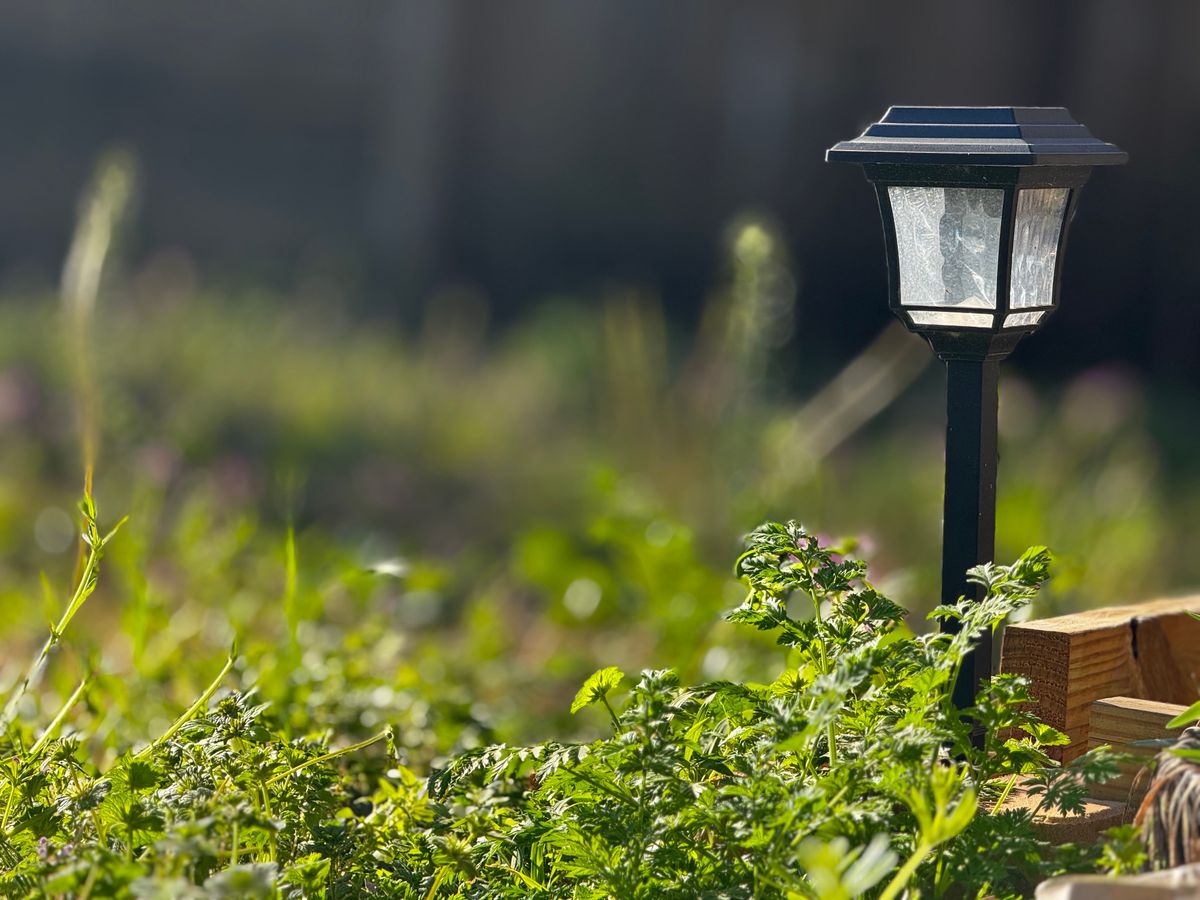
Match your light color temperature strictly to the functional purpose of the yard zone to avoid ugly color clashing or compromised security.
Best choice for
- 2700K - 3000K Warm White — Accentuates deep wood textures, masonry warmth, and natural plant colors without harsh glare.
- 4000K - 5000K Cool Daylight — Provides maximum contrast for 1080p and 4K security camera sensors to capture sharp facial and vehicle details.
- Avoid 5000K daylight white directly against outdoor patio seating where guests converse.
- Avoid 2700K dim lighting in dark side alleys where high-contrast security monitoring is critical.
- Avoid mounting solar spotlights directly under roof eaves or shaded tree canopies where sunlight is blocked.
- Linkind SL5C RGBTW Smart Spotlights — Allows quick adjustment between warm white, cool daylight, and vibrant colors without replacing fixtures.
Top Smart Solar Spotlight Configurations by Pack Size
Select the right bundle size based on your path length, perimeter gates, and garden focal points.
Real-World Setup Scenarios: Pathway Security vs. Architectural Uplighting
Japanese Maple & Brick Facade Uplighting — Set the Linkind SL5C to 2700K Warm White via the Aidot app v2.5.0. Stake the spotlight 6 feet back from the tree root base, angled 45 degrees upward. This emphasizes rich red leaves and natural brick tone while avoiding direct window glare.
Side Alley Gate Security & Camera Line-of-Sight — Set the light to 5000K Daylight White at 100% brightness. Mount the spotlight along the fence line facing the access gate. The high Kelvin light eliminates shadow pockets, providing clean contrast for smart security cameras.
Front Staggered Pathway Navigation — Space fixtures 5 to 7 feet apart along alternate sides of the walkway. Program them to 3500K Neutral White. Staggering prevents harsh hotspots, delivering smooth ground coverage for safe steps.
Here is how to configure your smart solar spotlights across common real-world yard applications.
Understanding outdoor lighting physics prevents common installation mistakes. Outdoor illumination serves two main purposes: human visual appreciation and sensor capture for home security.
The Security Camera Factor: Why Kelvin Affects Exposure Sensors
Digital outdoor security cameras rely on CMOS sensors tuned to process contrast and ambient light levels. Under 2700K warm light, wavelength spectrums lean heavily toward red and amber. While pleasing to the human eye, this lower color temperature produces softer edge contrast. As a result, moving subjects captured at 15 to 20 feet can appear smudged or blurry on camera footage.
When you switch your smart solar spotlight to 4500K–5000K daylight white, the light output shifts toward blue spectrum wavelengths. This cooler light maximizes shadow-to-light edge definition. Camera sensors can maintain faster electronic shutter speeds, capturing sharp facial features, clothing details, and license plates without motion blur.
Botanical and Architectural Aesthetics: Avoiding Plant Washout
Conversely, casting 5000K daylight white directly onto botanical features creates a cold, unnatural atmosphere. Green chlorophyl in foliage reflects blue wavelengths aggressively, causing vibrant palm leaves, Japanese maples, and floral beds to appear grey and washed out.
To preserve natural beauty, architectural brick, stone, and plant canopies should be illuminated with 2700K to 3000K warm white. This warm spectrum enhances natural earth tones, creating rich shadow depth and an inviting glow.
``` [ Kelvin Color Temperature Spectrum & Application Scale ]
2200K -------- 2700K -------- 3500K -------- 4500K -------- 5000K -------- 6500K Amber Warm White Neutral White Cool White Daylight Crisp Blue (Cozy Patio) (Foliage/Brick)(Pathways) (Gated Entry) (Security) (Commercial) ```
Solar Panel Optimization & Physical Positioning Rules
No matter which Kelvin preset you choose, maintaining continuous night-long performance requires smart solar panel management:
Related Guides and Landscape Lighting Resources
- Smart Solar Spotlight: The Ultimate Outdoor Pathway Lighting Solution
- Smart Solar Spotlight Setup & Troubleshooting FAQ
- Warm White vs. Cool White Outdoor Lighting: How to Choose the Right Kelvin for Your Yard
Frequently Asked Questions
Answers to common questions about setting up light color temperatures and smart solar spotlights.
Final Next Steps for Your Outdoor Lighting Upgrade
Your decision: Choose the optimal pack size and Kelvin zone plan for your yard space.
Do this next: Order your Linkind SL5C Smart Solar Spotlights, install them 5-7 feet from focal targets with latitude-calibrated solar panels, and schedule your custom accent and security scenes in Aidot app v2.5.0.
- Read next: Aidot App Setup & Color Temperature Customization Guide
Linkind SL5C Smart Solar Spotlight (RGBTW Color Changing)
Transform your outdoor space with smart, energy-efficient illumination.
Cover photo by San Photography on Pexels.