US Regional Solar Spotlight Alignment Guide: Finding Your Ideal Tilt Angle
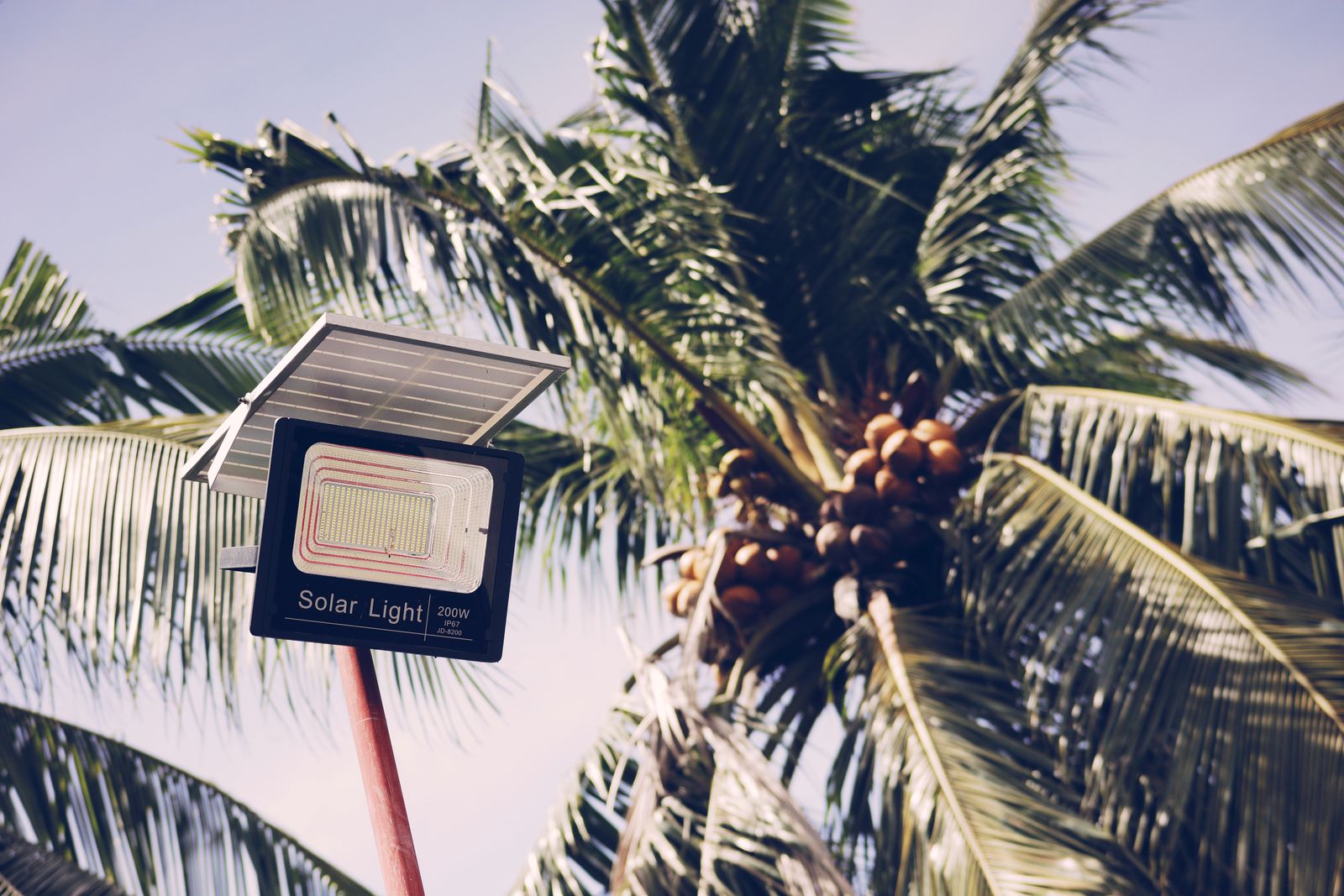
Contrary to popular belief, setting solar spotlights completely flat causes up to 40% efficiency loss. To achieve optimal battery charging across the US, face your solar panel true South and tilt it to your local latitude ±5° (e.g., 30°–35° in the South, 40°–45° in the North).
US Geographic Solar Insolation & Latitude Zones
Solar irradiance levels and solar zenith angles vary dramatically across the United States. In Southern regions (Sunbelt), high solar elevation angles provide abundant daily solar insolation (5.0 to 6.5 kWh/m²/day). In contrast, Northern states experience lower solar elevation angles, shorter winter day lengths, and average insolation dropping below 3.0 kWh/m²/day during peak winter months.
To keep smart solar spotlights operating reliably through long winter nights—especially when running color-changing scenes or high-brightness schedules—the photovoltaic panel must intercept incoming solar rays as close to a 90-degree perpendicular angle as possible. Aligning your spotlight's solar collector to your regional latitude zone overcomes seasonal sun path variation, prevents premature battery drain, and accelerates charging cycles even under overcast skies.
Regional Tilt Angle & Orientation Specifications
Photo by Gurgenidze G on Pexels
| US Region & Zone | Avg Latitude Range | Year-Round Tilt Angle (Lat ±5°) | Winter Tilt Target (Lat +15°) | Summer Tilt Target (Lat -15°) | Target Compass Orientation |
| --- | --- | --- | --- | --- | --- |
| Zone 1: Sunbelt / Deep South (FL, TX, AZ, Southern CA) | 25°N – 32°N | 28° – 32° | 40° – 45° | 15° – 20° | True South (180° Azimuth) |
| Zone 2: Central / Mid-Atlantic (NC, VA, MO, KS, CO) | 33°N – 39°N | 33° – 38° | 48° – 52° | 20° – 25° | True South (180° Azimuth) |
| Zone 3: Northern Tier / Midwest (NY, PA, OH, IL, IA) | 40°N – 44°N | 40° – 45° | 55° – 60° | 25° – 30° | True South (180° Azimuth) |
| Zone 4: Pacific Northwest & Far North (WA, OR, MN, ME) | 45°N – 49°N | 45° – 50° | 60° – 65° | 30° – 35° | True South (180° Azimuth) |
Use this state and latitude matrix to find your regional baseline tilt angle, optimal seasonal tilt targets, and target compass orientation.
Pro Tip: Accounting for Aidot App Battery Consumption
High-drain smart features—such as continuous dynamic RGBTW color scenes, music synchronization, and maximum white lumen brightness configured via the Aidot app (version 2.5.0)—require up to 35% more stored energy per night than standard warm white dimming. When operating automated lighting schedules, set your solar panel tilt angle to your Winter Target (Latitude + 15°) starting in October. This steeper angle maximizes solar harvesting during short daylight windows and prevents the light from turning off early.
Top 4 Solar Panel Alignment Mistakes in Landscape Lighting
Avoid these common errors to maintain maximum charging performance and extended light autonomy throughout the year.
Visual Guide: Solar Zenith Angle vs. Panel Tilt
This diagram illustrates the geometric relationship between incoming solar rays, seasonal solar elevation, and adjustable solar panel angles.
Frequently Asked Questions About Regional Solar Spotlight Tilt
Find clear answers to common geographic alignment and technical tilt questions.
Interactive Tool: US Solar Spotlight Tilt & Orientation Finder
Use this interactive calculator brief to determine your recommended degree tilt and compass heading based on your location.
Year-Round Performance Impact: Fixed vs. Regionally Aligned Panels
| Performance Criteria | Flat Mounted (0° Tilt) | Fixed Mid-Latitude (35° South) | Regionally Aligned (Lat ±5° South) | Seasonally Adjusted (Bi-Annual) | Incorrect Alignment (Facing North) |
| --- | --- | --- | --- | --- | --- |
| Peak Daily Battery Charge (%) | 55% – 65% | 80% – 90% | 95% – 100% | 100% | 20% – 35% |
| Winter Night Autonomy (Hours) | 4 – 6 Hours | 7 – 9 Hours | 10 – 12 Hours | 12+ Hours (All-Night) | 1 – 3 Hours |
| Aidot RGB Scene Reliability | Frequent shutoff on custom scenes | Good performance on low brightness | Full stability on high brightness | Maximum performance on all dynamic modes | Inconsistent connection & fast depletion |
| Debris & Snow Shedding Ability | Poor (Accumulates dirt/water) | Moderate | Good | Excellent (Steep winter angle) | Poor to Moderate |
| Maintenance Frequency | Monthly cleaning required | Seasonal inspection | Bi-annual cleaning | Bi-annual angle adjustment | Frequent manual intervention |
Compare expected charging performance, battery autonomy, and smart feature reliability across different panel positioning strategies.
Zone-by-Zone US Alignment Strategies
- Zone 1: Sunbelt & Deep South (FL, GA, AL, MS, LA, TX, NM, AZ, Southern CA) — With strong year-round solar radiation, set your solar panels to a 28°–32° tilt facing True South. Because summer sun angles reach near zenith, a shallower angle works well in summer, but keeping a 30° baseline ensures steady winter charging during shorter daylight hours.
- Zone 2: Mid-Atlantic, Midwest & Central Plains (NC, VA, KY, MO, KS, CO, UT, NV) — Set a fixed year-round tilt of 35°–38° facing True South. If you use app-controlled RGB dynamic lighting scenes during winter holiday displays, steepen the angle to 48°–50° in early November to capture low winter sun angles.
- Zone 3: Northern Tier & Great Lakes (NY, PA, OH, MI, IN, IL, IA, WI, MN, NE) — Position solar panels at 40°–45° facing True South. Winter sun elevation drops significantly in this zone; steepening the tilt to 55° during winter months helps shed snow and prevents early shutoffs.
- Zone 4: Pacific Northwest & Northern New England (WA, OR, ID, MT, ND, ME, VT, NH) — Maintain a baseline tilt of 45°–50° True South to optimize limited winter daylight hours and frequent cloud cover. Ensure panels are installed completely clear of dense evergreen tree canopy shadows.
Essential Takeaways for US Regional Solar Alignment
Keep these core alignment rules in mind when installing or adjusting smart outdoor spotlights.
Which Tilt Setup Strategy Fits Your Property?
For 90% of US homeowners, setting solar spotlight panels to face True South at an angle equal to your local latitude ±5° provides optimal year-round battery charging without requiring seasonal adjustments.
Best choice for
- Latitude + 5° Tilt Facing True South — Compensates for lower winter sun trajectories and shorter daylight hours.
- Latitude Tilt (30°–35°) Facing True South — Captures intense zenith light in summer while retaining strong winter collection.
- Avoid setting solar spotlight panels flat (0°) in northern states, as winter rain and low sun angles will starve the battery.
- Avoid pointing solar panels toward North or placing them under streetlights that cause ambient optical interference.
- Bi-Annual Seasonal Adjustments (+15° Winter / -15° Summer) — Maximizes peak photovoltaic efficiency for high-drain Aidot RGB smart scenes during winter months.
Real-World Installation Scenarios & Shade Workarounds
Illuminating a North-Facing House Wall or Front Entryway — Stake the spotlight fixture 5–7 feet in front of the wall aimed North. Swivel the independent top solar panel 180° around so it faces True South, tilted to your regional latitude angle.
Pathway Lighting Along Dense Tree Line or Eave Shadows — Use a staggered installation pattern 5–7 feet away from tall foliage. Position ground stakes slightly forward into open lawn areas to ensure uninterrupted sun exposure between 10 AM and 4 PM.
Sloping Yards or Terraced Flowerbeds — Adjust the ground stake elevation and use a digital angle finder app on your smartphone placed against the solar panel surface to verify the net tilt angle relative to True South, accounting for slope incline.
Practical solutions for challenging landscape layouts and installation constraints.
Related Optimization Guides
- How to Calculate the Best Solar Spotlight Tilt Angle for Your US Latitude
- How Many Solar Spotlights Do You Need? A Landscape Pack Size Selection Guide
- Solar Spotlight Placement FAQ: Solutions for Shaded Yards and Seasonal Sunlight
Recommended Smart Solar Spotlights with Adjustable Solar Panels
Upgrade your outdoor ambiance and security with high-efficiency, fully adjustable smart solar lighting.
Action Plan for Setting Up Your Smart Solar Spotlights
Your decision: Determine your local latitude and select either a year-round set-and-forget tilt angle (Latitude ±5°) or a bi-annual adjustment plan.
Do this next: Mount your solar spotlights 5-7 feet from illuminated objects, use a compass to face the solar panels True South, and tilt the panels according to your regional latitude zone.
- Read next: Seasonal Solar Spotlight Tilt Adjustments: Winter vs. Summer Optimization Guide
- Read next: How to Calculate the Best Solar Spotlight Tilt Angle for Your US Latitude
Linkind SL5C Smart Solar Spotlight (RGBTW Color-Changing, IP67 Waterproof) featuring an independently adjustable solar panel head.
Follow these steps to complete your installation and configure your outdoor lighting system.
Cover photo by Nothing Ahead on Pexels.