Wall Washing vs Spotlighting: Which Exterior Technique Is Right?
Should you use wall washing or spotlighting to illuminate your exterior home walls? Choose wall washing (5–7 ft setback, wide beam dispersion) for smooth, uniform illumination across broad, non-textured facades like stucco or lap siding. Choose spotlighting (2–4 ft setback, narrow directional focus) to accentuate architectural focal points like stone columns, archways, and statues with high-contrast depth.
Wall Washing vs. Spotlighting: Architectural Scenario Breakdown
| Architectural Scenario | Recommended Technique | Setback Distance | Beam Spread Angle | Primary Failure Mode to Avoid |
| --- | --- | --- | --- | --- |
| Smooth Stucco / Lap Siding Facade | Wall Washing | 5 to 7 feet | Wide (60°+) | Harsh optical hot-spotting from placing fixtures under 2 feet |
| Stacked Stone / Textured Masonry | Spotlighting (Grazing Angle) | 2 to 3 feet | Narrow (15°-30°) | Flattening natural masonry shadow depth with wide ambient light |
| Architectural Columns & Archways | Spotlighting | 2 to 4 feet | Narrow (15°-25°) | Light bleed and direct glare into interior windows |
| Broad Multi-Story House Facade | Wall Washing | 5 to 7 feet | Wide (60°+) | Shading solar panel under deep roof overhangs / soffits |
| Entryway Features & Garden Statues | Spotlighting | 3 to 5 feet | Medium (30°) | Direct blinding glare to approaching visitors |
Compare how wall washing and spotlighting perform across different exterior siding materials, setback clearances, and light distribution setups.
Pros and Cons of Wall Washing vs. Spotlighting
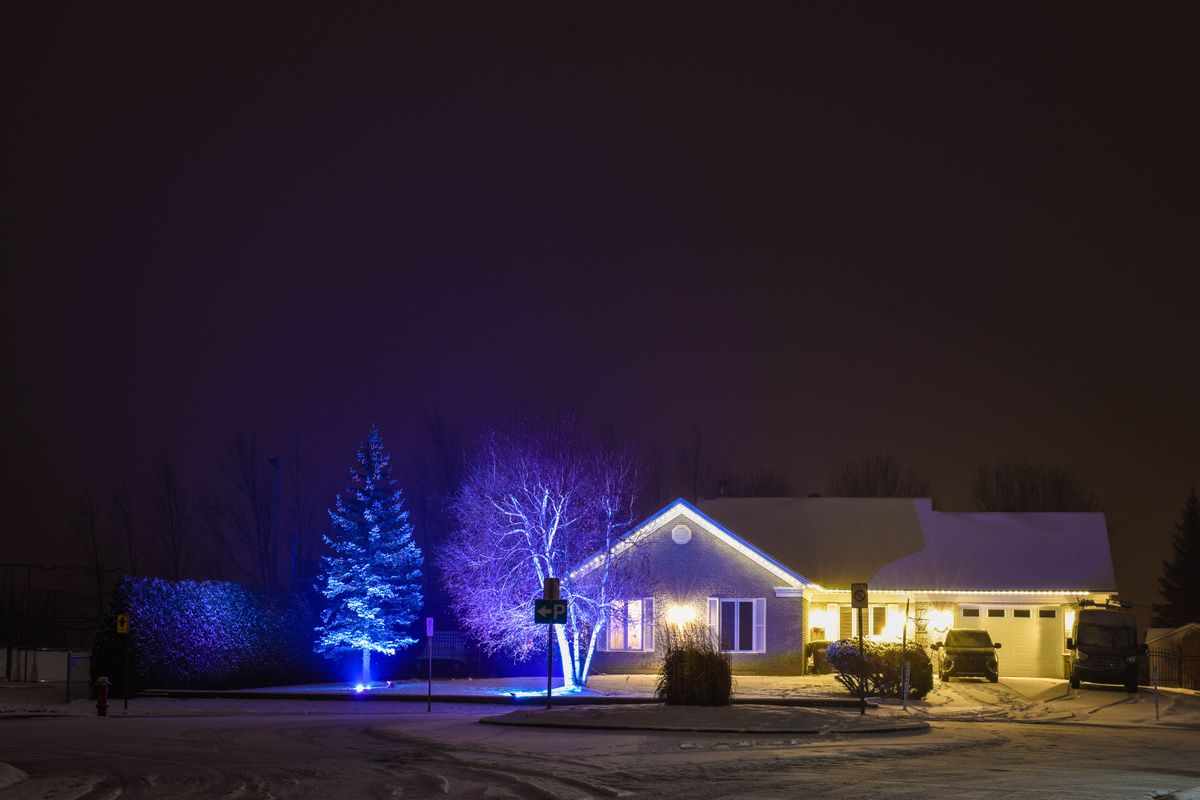
Photo by Marius-Laurentiu Butan on Pexels
Understanding the optical trade-offs of each exterior illumination method prevents costly placement errors and glare issues.
Top Smart Solar Fixture: Linkind SL5C Smart Solar Spotlight
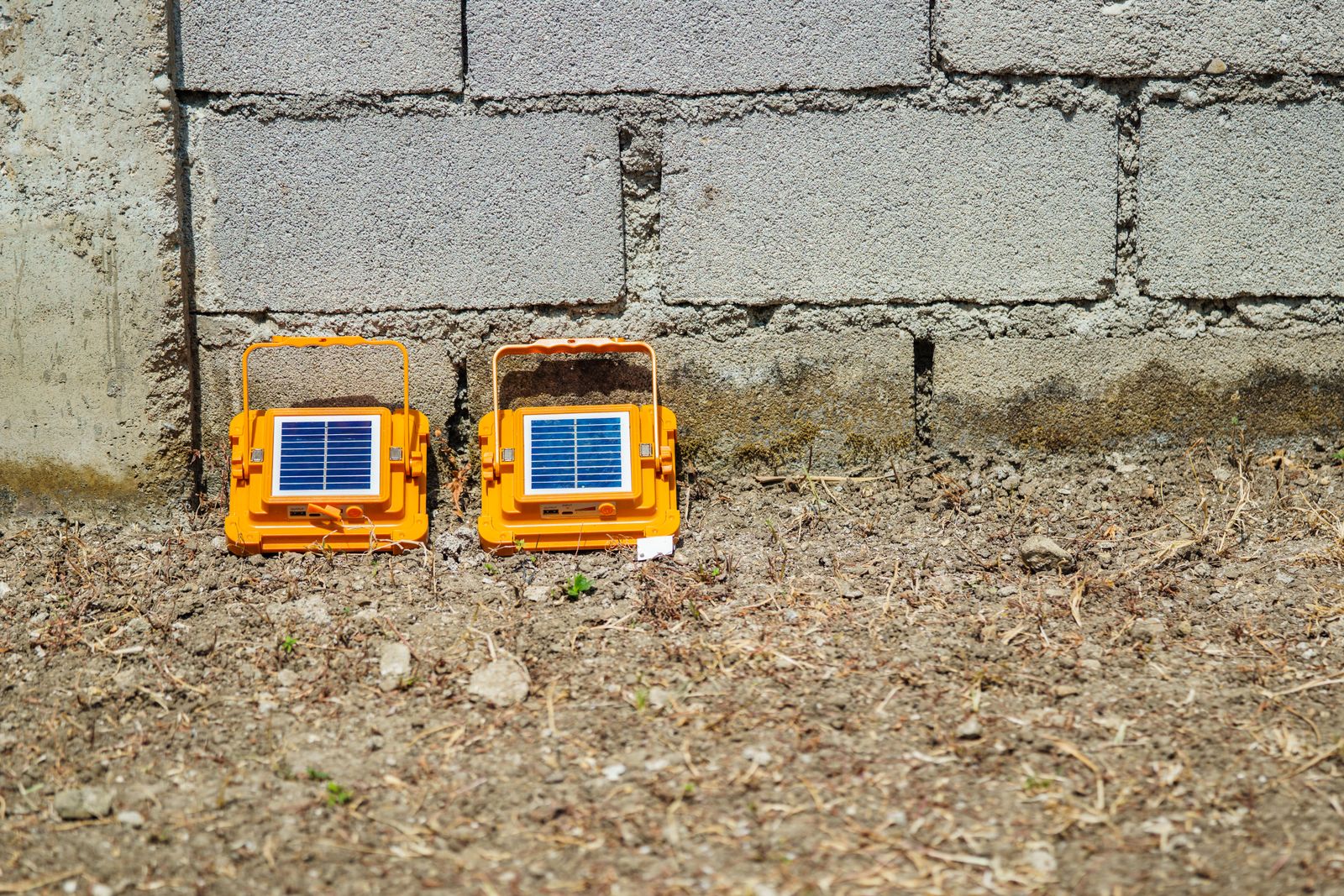
The Linkind SL5C Smart Solar Spotlight is our recommended fixture for executing both architectural wall washing and directional spotlighting. Featuring full RGBTW color-changing capabilities, an IP67 waterproof rating, and integration with the Aidot app (v2.5.0), it allows homeowners to adjust color temperature, dimming level, and light scenes wirelessly without re-running electrical wires.
Pro Setback & Solar Panel Tilt Rules for Wall Placement
When placing smart solar spotlights near house exterior walls, ensure a 5 to 7 foot setback from the wall base for wall washing, or 2 to 4 feet for spotlighting. Furthermore, to maintain a full battery charge without electrical wiring, ensure the integrated solar panel is positioned away from deep soffit overhang shadows. In the Northern Hemisphere, tilt the solar panel toward the south at an angle equal to your local latitude ±5° for maximum daily energy yield.
Decision Flowchart: Selecting the Right Exterior Technique
- Is your main goal to illuminate a broad wall or a single architectural detail? → Yes: Targeting broad wall -> Check wall texture type.. No: Targeting single detail -> Check focal object type.
- Is the broad wall made of smooth stucco/siding or heavily textured stone? → Yes: Smooth wall -> Select Wall Washing (5–7 ft setback, wide beam angle).. No: Textured stone -> Select Spotlighting / Grazing (2–3 ft setback, narrow beam).
- Is the focal feature an architectural column, entryway, or statue? → Yes: Column / Statue -> Select Spotlighting (2–4 ft setback, warm 2700K–3000K white).. No: Pathway / Perimeter -> Select Staggered Low-Level Path Lighting.
Optical Beam Spread & Placement Diagrams
The visual specifications below detail side-by-side beam angle dispersion, fixture distance from wall, cone overlapping, and shadow angles.
Core Lighting Principles At A Glance
Keep these core architectural rules in mind when planning your exterior lighting project:
Architectural Decision Support Matrix
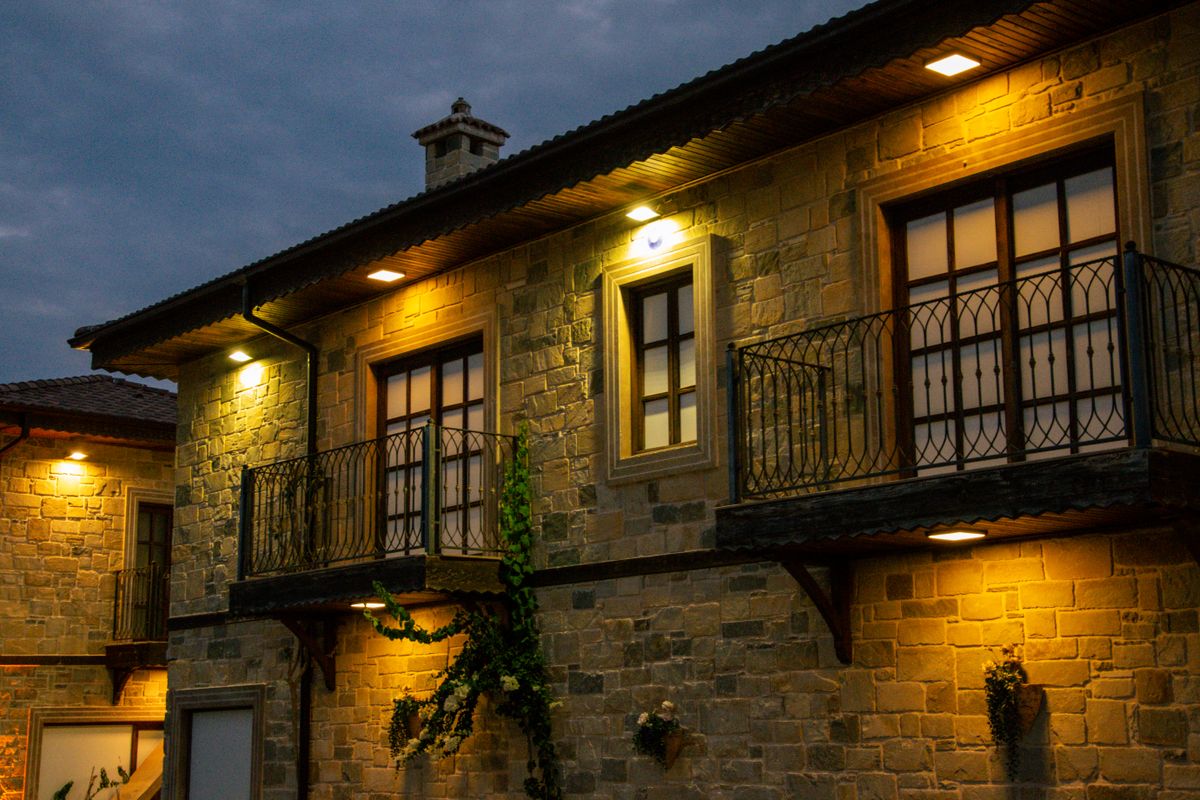
Photo by Anna Klymenko on Pexels
Wall washing flattens textures with broad, uniform light (wide beam angle, 5-7 ft setback), while spotlighting accentuates focal points with high-contrast, directional beams (narrow angle, 2-4 ft setback).
Best choice for
- Wall Washing — Smooth surfaces benefit from wide, seamless light dispersion without dramatic shadows.
- Spotlighting — Narrow directional light casts deep shadow relief, emphasizing natural masonry textures.
- Avoid wall washing on heavily coarse flagstone or rough stone where you want texture contrast.
- Avoid narrow spotlighting on flat, featureless walls as it causes ugly localized hot-spots.
- Surface Grazing — Placing spotlights within 1 foot of heavy stone walls creates maximum shadow depth across textured masonry.
Optimal Smart Solar Equipment & Pack Configuration
Select the ideal pack size of smart color-changing solar spotlights based on your home's facade length and architectural scale.
Real-World Failure Modes & Solutions
Failure Mode 1: Intense Optical Hot-Spots on Exterior Walls — Occurs when spotlight fixtures are placed less than 12 inches from flat siding. Increase setback distance to 5–7 feet for wall washing or tilt the beam upward at a wider angle.
Failure Mode 2: Solar Spotlight Battery Depletion by Midnight — Occurs when solar panels are shaded by roof overhangs or eave soffits. Relocate fixtures 5–7 feet forward into unshaded terrain and adjust solar panel tilt to local latitude ±5°.
Failure Mode 3: Flattened, Lifeless Stone Wall Texture — Occurs when wide wall washing is applied to rough stone masonry. Switch to narrow-angle spotlighting offset 2–3 feet from the wall to create high-contrast shadow depth.
Failure Mode 4: Glare Blinding Interior Living Rooms — Occurs when upward spotlight beams pass directly into ground-floor windows. Re-angle beams away from window sightlines or use the Aidot app (v2.5.0) to lower brightness to 40% in occupied zones.
Common lighting mistakes can ruin your home's exterior aesthetic. Here is how to diagnose and fix primary failure modes immediately:
Understanding Optical Beam Angles and Lux Distribution
The fundamental difference between wall washing and spotlighting lies in optical beam dispersion and light throw geometry. Wall washing utilizes wide-angle optics (typically 60° to 120° beam spread) to deliver diffuse, low-contrast illumination over broad surface areas. This technique reduces ambient glare and eliminates shadow voids, making it the preferred method for expansive, smooth building facades.
In contrast, spotlighting relies on narrow optical cones (typically 15° to 30° beam spread) to concentrate lumens onto a specific focal element. This high lux concentration increases visual contrast, drawing the eye toward architectural pillars, stone arches, or decorative foliage.
Setback Distance and Photometric Rules
To achieve professional wall washing results without creating harsh glare or dark ground voids:
Smart App Control and Color Temperature Tuning
Modern smart solar fixtures like the Linkind SL5C remove the guesswork from architectural lighting. Utilizing the Aidot app (version 2.5.0), homeowners can dynamically switch between scene modes and adjust color temperatures across the RGBTW spectrum:
- Warm White (2700K - 3000K): Accentuates natural wood siding, red brick, and warm earth tones.
- Cool White (4000K - 5000K): Enhances modern white stucco, gray stone masonry, and dark trim details.
- RGBTW Color Scenes: Synchronize custom color changes for holidays, security accents, or outdoor entertainment events.
Frequently Asked Questions
Find quick answers to common technical and installation questions regarding smart solar spotlights.
Actionable Implementation & Next Steps
Your decision: Determine whether your exterior feature requires broad uniform light (wall wash) or dramatic focal highlighting (spotlight).
Do this next: Measure your wall facade, check for eaves shadows to set solar panel angle at local latitude ±5°, and deploy smart solar spotlights 5-7 feet offset for balanced wall washing.
- Read next: How to Position Smart Solar Spotlights to Eliminate Perimeter Dark Spots
- Read next: How to Uplight Trees and Botanical Features Using Smart Solar Spotlights
Select the Linkind SL5C Smart Solar Spotlight (Multi-Pack) for versatile IP67 waterproof architectural lighting.
Ready to transform your outdoor space? Follow these steps to measure your facade, configure your solar panels, and deploy your smart lighting.