RGBTW vs. RGBW Solar Spotlights: Which Is Best for Outdoor Entertainment?
Should you upgrade to RGBTW solar spotlights or stick with standard RGBW fixtures for your backyard? Choose RGBTW if you entertain outdoors or have natural wood, brick, or stone surfaces. RGBW fixtures rely on a single static white diode—typically a harsh 6000K cold blue—that causes severe color clashing on natural deck materials and brickwork. RGBTW spotlights integrate Tunable White (TW) technology spanning 2700K warm amber to 6500K cool daylight alongside full RGB, letting you seamlessly shift from cozy candlelit outdoor dining to vibrant, music-synced party scenes using the Aidot app (v2.5.0).
Scenario Comparison: RGBTW vs. RGBW Performance Across Outdoor Uses
| Outdoor Hosting Scenario | RGBW Performance (Static White) | RGBTW Performance (Tunable White) | Key Architectural Advantage |
| --- | --- | --- | --- |
| Warm Cedar Deck & Red Brick Patio Dining | Fails: Emits 6000K icy white glare that washes out natural grain and makes brick look sterile and cold. | Excels: Tunes smoothly down to 2700K warm amber, accentuating wood warmth and natural masonry tones. | Continuous CCT control (2700K-6500K) vs static cool white LED chip |
| Dynamic Outdoor Music Sync Parties | Fails: Limited to basic color strobing with fixed white balance that disrupts colorful scene transitions. | Excels: Seamlessly blends vibrant RGB hues with calibrated white temperatures synced to music beats in Aidot App v2.5.0. | Dedicated 5-in-1 chip driver integration for smooth multi-channel blending |
| Botanical & Foliage Accent Uplighting | Fails: Oversaturates leaves with unnatural blueish light, creating a synthetic, washed-out appearance. | Excels: Dial in 4000K neutral white to render true botanical green pigments without color distortion. | High Color Rendering Index (CRI) across custom white spectrum |
| Late-Night Pathway Security & Visibility | Fails: High-glare static white creates harsh shadow gaps between light throws. | Excels: Adjustable 5000K daylight setting yields crisp visibility without blinding guests when spaced 5-7 ft apart. | Customizable lumen output and localized beam diffusion |
Compare how static RGBW white diodes fail in common backyard hosting scenarios where RGBTW's continuous temperature spectrum excels.
Architectural & Functional Trade-Offs: RGBW vs. RGBTW
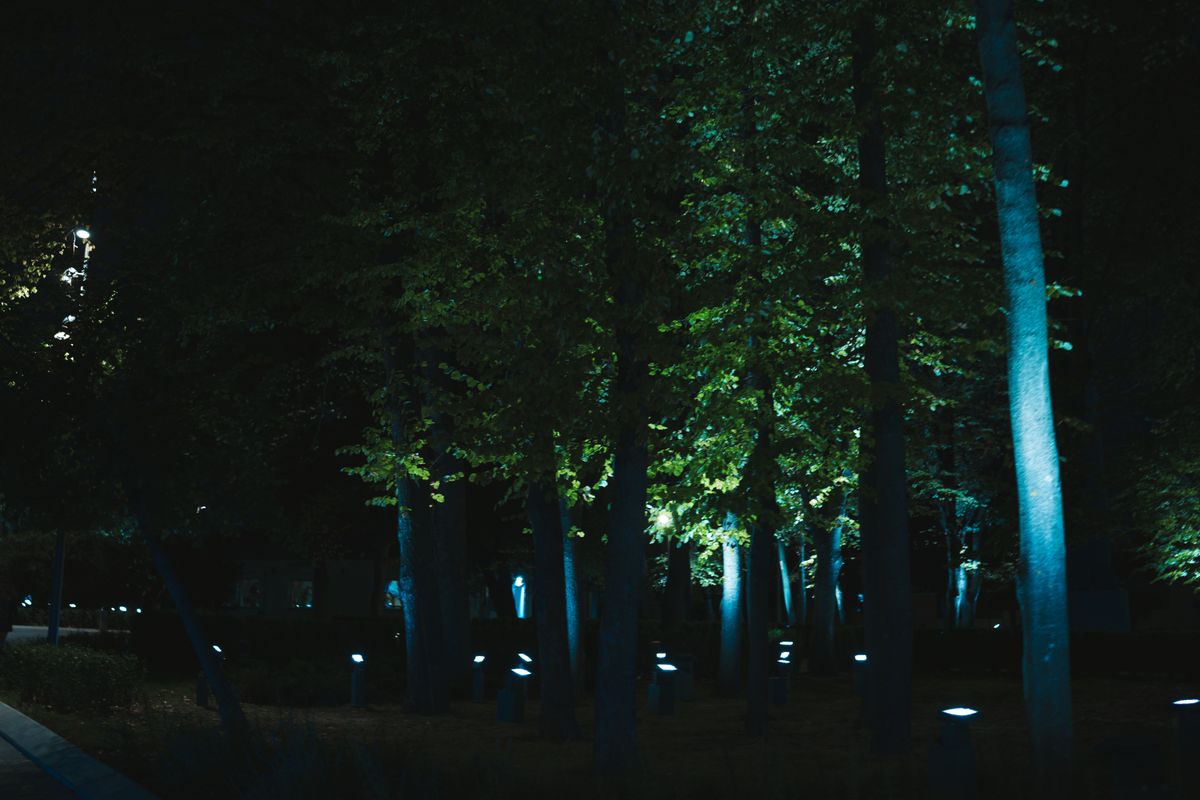
Photo by Irina Iriser on Pexels
Pros
- RGBTW provides complete CCT spectrum control from 2700K (warm cozy glow) to 6500K (crisp security daylight).
- RGBTW eliminates the clinical, hospital-like glare on warm cedar decks, red brick, and flagstone patio pavers.
- RGBTW supports custom scene scheduling and dynamic music synchronization in the Aidot app (v2.5.0).
- Linkind SL5C RGBTW spotlights feature IP67 weatherproofing and solar panel tilt optimization (±5° from local latitude) for reliable all-night power.
- RGBW fixtures use a fixed 6000K white diode, making them incapable of producing warm ambient evening light.
- RGBW static white diodes cannot adapt to dynamic party scenes, resulting in jarring contrast during color shifts.
- Standard RGBW lights lack advanced smart app grouping and continuous white temperature sliders.
Our Recommendation for Home Entertainers: Linkind SL5C Smart Solar Spotlight
For homeowners who value both security and backyard party aesthetics, the Linkind SL5C Smart Solar Spotlight is the definitive choice. Featuring RGBTW 5-in-1 LED chip architecture, an IP67 waterproof rating, and full control via Aidot App v2.5.0, it allows you to customize exact white color temperatures or pair lights to music. To maximize night-long runtime during hosting, mount solar panels at a tilt angle within ±5° of your local latitude and maintain a staggered 5-to-7-foot spacing along garden borders.
Ready to transform your patio for your next outdoor gathering? Upgrade to the Linkind SL5C RGBTW Smart Solar Spotlight pack today and unlock full spectrum white tuning and app-controlled party scenes.
Outdoor Entertainment Scene Decision Matrix: Which Spectrum Fits Your Setup?
- What is the primary material of your entertainment area? → Yes: Wood Decking, Red Brick, Warm Pavers -> Choose RGBTW (2700K Warm White needed). No: Go to Next Question
- Do you host evening dinner parties or dynamic backyard events? → Yes: Yes -> Choose RGBTW (Requires Aidot App v2.5.0 CCT tuning & Music Sync). No: No -> Go to Next Question
- Are you strictly seeking basic, fixed-color perimeter security accent lighting? → Yes: Yes -> Basic RGBW may suffice, but RGBTW offers better long-term lighting versatility.. No: Choose RGBTW for full spectrum outdoor flexibility.
Visual Architecture: RGBTW vs RGBW Chip Layout & CCT Spectrum
This diagram illustrates the physical hardware differences between 4-in-1 RGBW chips and 5-in-1 RGBTW chips, along with the Kelvin color temperature scale.
Interactive Tool: Outdoor Party Ambiance & Pack Size Planner
Use this tool concept to calculate the exact spotlight quantity required for your patio perimeter and estimate battery runtime based on light mode.
Core Takeaways: Why Tunable White Matters for Hosting
- Static White Failure Mode: Standard RGBW lights produce a fixed ~6000K blueish white that clashes with warm cedar decks, brick, and natural stone.
- Tunable White Flexibility: RGBTW adds independent warm and cool white diodes (2700K to 6500K), allowing instant adjustment from intimate candlelit dining to crisp daylight.
- Smart App Hosting Controls: Linkind SL5C spotlights integrate with Aidot App v2.5.0 for custom color scene creation and dynamic music synchronization.
- Optimal Charging Performance: Set solar panel tilt to ±5° of your local latitude and avoid shaded eaves to ensure all-night power during evening parties.
- Pro Placement Rule: Space spotlights 5 to 7 feet apart in a staggered pattern to achieve uniform light distribution without visual hot-spotting.
Decision Framework: Selecting Based on Surface, Atmosphere, and Budget
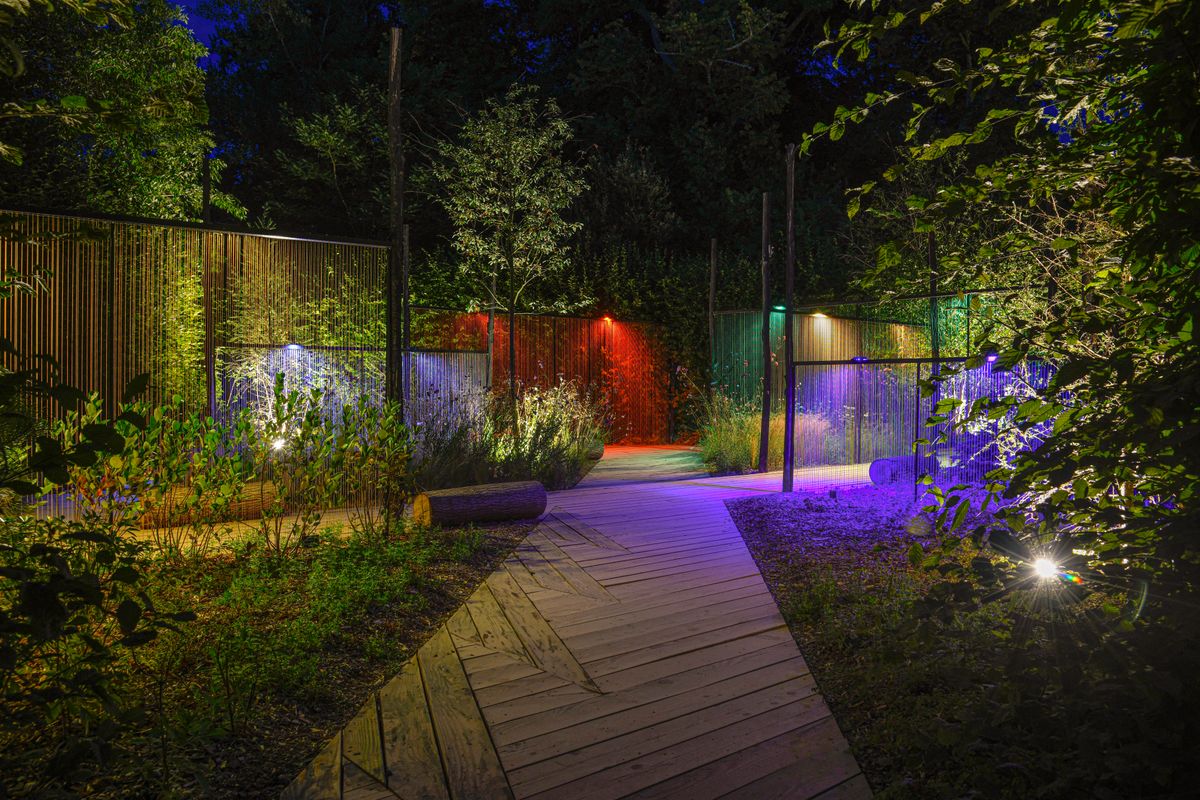
Photo by Thierry coulon on Pexels
Choose RGBTW if you host outdoor events and need continuous correlated color temperature (CCT) adjustment from warm 2700K candlelight to 6500K daylight, along with dynamic music sync. Choose standard RGBW only if fixed cool white accents are acceptable.
Best choice for
- RGBTW Smart Solar Spotlight — Tunable white allows seamless transitions from warm ambient dining light to dynamic, vibrant color scenes with music sync via Aidot App v2.5.0.
- RGBTW Smart Solar Spotlight — Allows precise calibration to 2700K-3000K warm white, preventing the clinical, washed-out blue effect caused by fixed RGBW diodes.
- Avoid RGBW fixtures if your outdoor space features natural wood decks, warm stone patio pavers, or red brickwork, as fixed RGBW white LEDs create harsh, hospital-like glare.
- Avoid basic solar spotlights without app control if you host events requiring custom color scenes or synchronized party lighting.
- Standard RGBW Solar Lights — Only recommended for basic perimeter security where color temperature control and warm ambient lighting are not required.
Recommended Product Configurations: Linkind SL5C RGBTW Spotlight Packs
Select the appropriate bundle size of Linkind SL5C RGBTW Smart Solar Spotlights based on your yard's layout dimensions.
Real-World Hosting Scenarios & Failure Modes to Avoid
Failure Mode 1: The 'Hospital Hallway' Cedar Deck Glare — Homeowners who install RGBW spotlights on cedar decks often find the static 6000K white light turns warm wood grey and sterile. Switching to Linkind SL5C RGBTW lights lets you set the CCT slider to 2700K in Aidot App v2.5.0, producing an inviting amber glow that enhances natural grain.
Failure Mode 2: Washed-Out Foliage Along Patio Borders — Uplighting Japanese Maples or garden borders with RGB-mixed white results in muddy color distortion. RGBTW utilizes dedicated warm and cool white diodes to deliver a 4000K neutral white wash that brings out vibrant natural greens and deep reds.
Failure Mode 3: Battery Depletion Mid-Party — Placing spotlights directly under roof eaves or uncalibrated angles leads to early power drop-off. Ensure panels are unshaded and tilted at ±5° from your local latitude. RGBTW smart power management in Aidot App v2.5.0 balances brightness for full night coverage.
Examine concrete hosting failure modes and how RGBTW smart solar spotlights eliminate visual defects.
Understanding LED Diode Architecture: RGBW vs. RGBTW
To understand why standard RGBW lighting fails in residential landscape design, one must examine the semiconductor layout. A standard RGBW LED chip contains four individual diodes: Red, Green, Blue, and a single static White diode (typically calibrated to 6000K–6500K daylight). When an RGBW light produces white, it either fires this single cold white diode or attempts to mix Red, Green, and Blue light. Mixed RGB white produces a low Color Rendering Index (CRI) with noticeable rainbow fringing and unnatural purple-tinted shadows.In contrast, an RGBTW (Red, Green, Blue, Tunable White) chip incorporates five distinct LED elements: Red, Green, Blue, Warm White (2700K), and Cool White (6500K). By variable-current driving these two independent white diodes, RGBTW fixtures achieve smooth, continuous Correlated Color Temperature (CCT) tuning across the full spectrum. You can dial in precise warmth without sacrificing brightness or CRI.
``` [ RGBW 4-Chip Layout ] --> [ Red ] [ Green ] [ Blue ] [ Fixed 6000K White ] [ RGBTW 5-Chip Layout ] --> [ Red ] [ Green ] [ Blue ] [ Warm 2700K ] [ Cool 6500K ] ```
Advanced App Control and Party Ambiance
With the Aidot app (version 2.5.0), the Linkind SL5C Smart Solar Spotlight leverages its RGBTW architecture for sophisticated outdoor scenes. Homeowners can group fixtures, adjust CCT sliders independently from RGB saturation, and create custom dynamic light modes. For backyard parties, the Music Sync feature analyzes ambient audio rhythms through your smartphone and translates beats into synchronized light pulses across your patio.Optimization for Solar Charging and Placement
Even the most advanced lighting architecture relies on proper power management. Solar spotlight efficiency depends directly on photovoltaic collection. To guarantee all-night illumination during evening gatherings:Frequently Asked Questions About RGBTW Solar Spotlights
What is the main difference between RGBTW and RGBW solar lights?
RGBW includes Red, Green, Blue, and a single fixed White diode (usually cold 6000K), while RGBTW includes Tunable White (TW) capabilities ranging continuously from warm 2700K to cool 6500K.
Why does RGBW lighting look bad on wood decks and red brick?
Static RGBW white diodes emit high-kelvin cool blue light which clashes with natural warm earth tones, whereas RGBTW can be tuned to warm 2700K amber to highlight natural textures.
Do RGBTW solar spotlights consume more battery power during parties?
Power consumption depends on brightness and dynamic scene settings in Aidot App v2.5.0, but smart solar management allows all-night illumination when charged at the optimal tilt angle.
How far apart should I install Linkind SL5C RGBTW spotlights for optimal party lighting?
Specify the 5-7 foot spacing rule from target objects or along pathways to ensure uniform illumination without hot-spotting or harsh shadow gaps.
Answers to common technical questions regarding RGBTW solar spotlight technology and outdoor party lighting setup.
Actionable Next Steps for Setting Up Your Yard Lighting
Your decision: Choose RGBTW smart solar spotlights to guarantee proper Kelvin light warmth for deck materials and dynamic app-controlled party scenes.
Do this next: Select the appropriate pack size of Linkind SL5C Smart Solar Spotlights, install units 5-7 feet apart, and tilt solar panels ±5° from local latitude.
- Read next: How to Create Dynamic RGBTW Lighting Scenes and Music Sync for Outdoor Parties
- Read next: How to Uplight Trees and Botanical Features Using Smart Solar Spotlights
Linkind SL5C Smart Solar Spotlight (4-Pack) for complete patio perimeter coverage.
Follow these final recommendations to choose the right pack size and configure your smart solar spotlights for your next event.