How to Position Solar Spotlights for Maximum Sunlight: Angle and Shade Strategies
Position solar spotlights for maximum sunlight by giving the panel a shade-free view of the sky, tilting it near local latitude plus or minus 5 degrees, and only then aiming the head. The Linkind SL5C Smart Solar Spotlight is a 350-lumen RGBTW fixture with an optimal tilt design; it still fails if the face sits under a hedge or a porch flood. Offset the stake into sun, keep 5-7 feet to the subject, and treat shade as a veto, not as a dimmer setting.
The panel and the beam can live in different places
A tree that needs light is often the same tree that throws shade. The fix is not a brighter lamp. The fix is a stake in a sunlit patch, head aimed back at the trunk from 5-7 feet. Walls, fences, and dense shrubs follow the same split: subject in shade is allowed; panel in shade is not.
Walk the yard at solar noon and again at 4 p.m. The morning sun a panel gets is useless if a garage eave covers it from 11 onward. Avoid shadowed solar panels is the documented rule, not a suggestion for perfect sites only.
Strong light sources are the other veto. A security flood that washes the solar face all evening is a competing source. Move the spotlight or stop flooding that patch.
Angle is tilt plus aim, in that order
Photo by Serena Koi on Pexels
Set panel tilt first: Northern Hemisphere yards use local latitude plus or minus 5 degrees toward open sky. Then rotate the head to the subject. If the hinge fight means you can have only one, keep the panel in the sun and choose a different subject.
Maximum sunlight is not a panel slammed vertical or slammed flat. Vertical misses high summer sun. Flat misses winter. The latitude band is the strategy.
The guide to installing solar spotlights for optimal charging walks the mechanical steps. This page is the shade-and-angle logic those steps implement.
Seasonal shade is still shade
Leaf-out in May can kill a site that worked in March. A south-facing bed that is open in winter may sit under a maple from June to October. Either accept a seasonal dim period, move the stake, or light a different feature in summer.
Snow on the face is shade. Brush it. Do not build a roof. IP67 is the wet-weather rating; it is not a license to bury the cells.
Runtime of 8-12 hours is the prize for a clean charge. A half-shaded panel produces a short night, which people then blame on the Aidot app. Check the sky first.
Placement patterns that keep sun and still look designed
Path lights: stagger left and right, panels toward the open lawn, heads across the walk. Tree lights: stake at the dripline if that ring is sunlit, not in the root flare under the canopy. Facade lights: pull 5-7 feet off the wall into the yard, not into a soffit. Hardscape: graze from the sunlit side.
DIY install at $0 estimated cost means trial stakes are cheap. Leave a fixture in a candidate patch for one clear day, then judge the night. If the lamp dies early, the placement failed, not the RGBTW chip.
Listed lifespan of 3-5 years is easier to reach when the panel is not cooking under a leaf mat or sitting in a dark alley.
Sun-first placement versus shade-first placement
| Site | Sun-first move | Shade-first mistake | | --- | --- | --- | | Uplight a tree | Stake in a sunlit ring, aim back 5-7 ft | Hide the panel under the canopy | | Wash a wall | Pull into the yard, tilt panel to sky | Tuck the lamp under the soffit | | Light a path | Panel toward open lawn, head across the walk | Stake in the hedge for invisibility | | Corner by a porch flood | Move off the wash, or kill the flood | Add more spots to overpower the flood | | Winter-only bed | Use it in leaf-off; relocate after leaf-out | Assume March sun lasts until October |
App settings cannot invent sun
Aidot 2.5.0 can adjust brightness, color temperature, scenes, and music sync. Those tools spend the charge. They do not create it. Dim a slightly weak site to finish the night. Do not dim a fully shaded site and call it strategy.
RGBTW color at full saturation costs the same cell as white. Party mode on a poorly charged pack is a short show.
350 lumens is plenty at 5-7 feet when the cell is full. Placement is how it stays full.
Sun and shade placement checklist
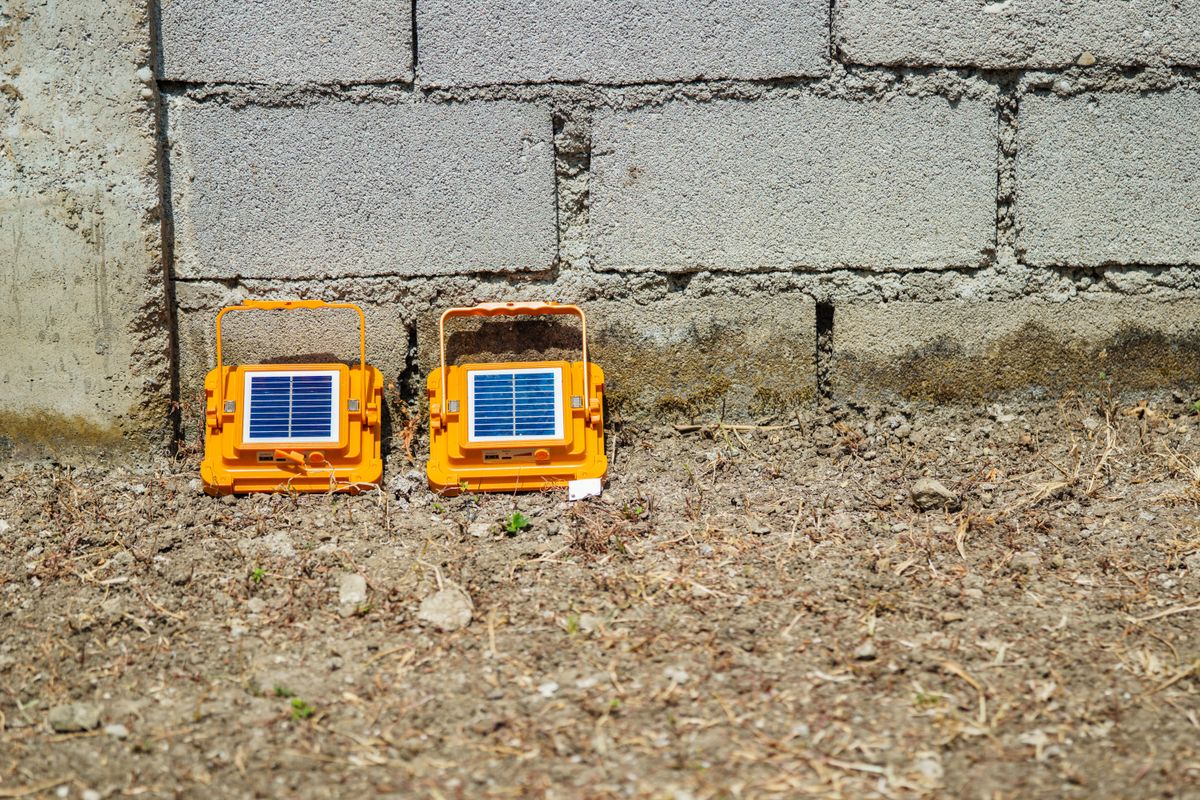
Photo by Nothing Ahead on Pexels
- [ ] Stand at the stake at midday; the panel must see sky, not a hedge.
- [ ] Set tilt to local latitude plus or minus 5 degrees.
- [ ] Aim the head separately, 5-7 feet from the subject.
- [ ] Walk away from porch floods and other strong lights.
- [ ] Recheck after leaf-out, leaf-drop, and snow.
- [ ] Judge success by an 8-12 hour night, not by the first dusk look.
Frequently asked questions
Can a solar spotlight work if the subject is in shade?
Yes, if the panel is not. Offset the stake into sun and aim back at the subject from 5-7 feet.
Is partial shade all day acceptable?
Treat it as a risk. The documented guidance is to avoid shadowed panels. A brief passing shadow is different from a day under an eave.
Should I point the panel straight up?
No. Use the latitude plus or minus 5 degree band toward open sky.
Why does a lamp under a porch flood act strange?
Strong light on the solar face is a listed problem. Move the fixture off that wash.
Does IP67 mean I can hide the panel in mulch?
No. IP67 is weather sealing. The face still has to see the sun.
Related reading
Install, troubleshooting, and backyard setup pages sit next to this sun-first map.
- how to install solar smart spotlights for backyard lighting
- smart solar spotlight setup and troubleshooting FAQ
- benefits of smart solar outdoor lights
What to do next
Pick each subject, then hunt a sunlit stake position 5-7 feet away. Tilt the Linkind SL5C panel to local latitude plus or minus 5 degrees, aim the head, and reject any site that stays in shade or under a strong competing light. Confirm the next clear night actually runs 8-12 hours before adding more fixtures.
Cover photo by Angelo Capitanio on Pexels.