Smart Solar Spotlight Buying Guide: Selecting the Right Pack Size for Your Property
The right pack size of smart solar spotlights for a property is the number of lighting jobs that have both a subject and a sunlit panel location, not a guess from lot size. Each Linkind SL5C Smart Solar Spotlight delivers 350 lumens, runs 8-12 hours, and belongs 5-7 feet from the object it lights. Walk the property, list those jobs, subtract shade, then buy that many DIY solar fixtures. Extra units in a closet do not light a yard; missing units on a dark stair do not either.
Pack size is a job list, not an acre formula
A quarter-acre with one front walk and a specimen tree may need four fixtures. A smaller patio with two beds, a wall, and steps may need six. Square footage lies. Count what should be visible after dark: the walk, the risers, a dark house corner, a tree worth uplighting.
Write one line per job. A job is one beam on one subject from one stake. Two trees are two jobs. A long walk is several jobs along a stagger, not one spotlight at the start.
The guide to positioning and installing smart solar outdoor spotlights is the placement map for that count.
350 lumens sets how many you need
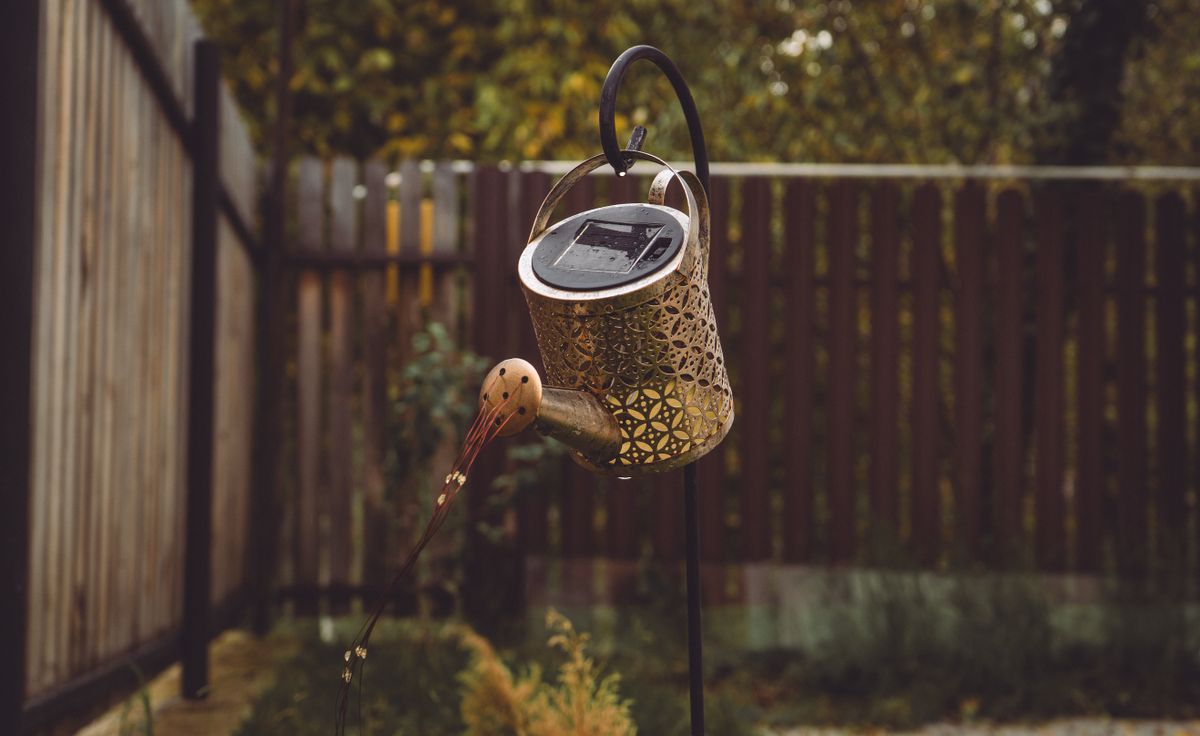
Photo by Gurgenidze G on Pexels
These are not 2000-lumen floods. At 350 lumens, one SL5C lights a subject in the 5-7 foot working distance. It does not wash an entire facade from the opposite lot line. If the house face is wide, plan two or three aimed zones, not one heroic lamp in the lawn.
Overlapping two beams on the same shrub is a wasted pack slot. Split them: one on the shrub, one on the path beside it. Pack size shrinks when each fixture has a unique job.
RGBTW and Aidot app scenes do not change the count. Color, music sync, and brightness are modes on the same hardware. The pack still has to cover the physical yard.
Shade subtracts from the cart
A listed job that sits under a dense eave, a north wall with no sky, or a hedge that covers the panel is not a buy. The product guidance is explicit: avoid shadowed solar panels and strong light sources. Those positions fail to charge, so the 8-12 hour runtime never arrives.
If a tree is the subject, the panel still needs sun. Offset the stake into a sunlit patch and aim the head back at the trunk, still near the 5-7 foot distance. If that offset does not exist, drop the job from this pack and light a different feature.
Strong competing light from a porch flood can also spoil a solar location. Move the spotlight or dim the competing lamp. Do not add three more spots to overpower a bad site.
Property types and a sane starting count
A townhouse frontage is often a walk, a stoop, and one planting bed: three to five fixtures if every panel sees sky. A typical suburban lot adds a driveway apron, a rear patio, and one tree: six to ten. A long rural drive is not a spotlight pack problem by itself; it is a different fixture family. Keep this buy on near-yard subjects the 350-lumen beam can actually reach.
Install in one DIY session, confirm charge the next evening, then add a second small set if a dark pocket remains. Listed lifespan is 3-5 years; identical fixtures are easier to restock than a mixed zoo of random solar lamps.
How to turn a property into a pack count
| Property pattern | Jobs to count | Shade rule | | --- | --- | --- | | Townhouse front | Walk, stoop, one bed | Skip the covered porch soffit | | Suburban lot | Walk, steps, 1-2 trees, one facade zone | Offset panels into open sky | | Patio-first yard | Borders, wall wash, dining edge | Avoid the table umbrella shadow | | Long rural drive | Near-house only with this 350-lumen class | Do not buy a drive-length pack of spots | | Already-lit wired beds | Fill the unwired gaps only | Do not double-stack sunlit beds |
DIY pack math has no electrician line
Estimated installation cost is $0 for DIY. Pack size is therefore labor you will actually do in an afternoon: stakes, tilt, app pairing in Aidot 2.5.0. If ten locations are real but only six will be aimed this weekend, buy six, then return for the rest after the first charge cycle proves the sites.
Solar powered with no extra electric cost means a larger pack does not raise the utility bill. The constraint is sun and jobs, not kilowatt-hours. Store boxed extras dry.
Property pack-size checklist
- [ ] List each subject: walk segment, step, tree, wall, bed.
- [ ] Assign one 350-lumen spotlight at 5-7 feet per subject.
- [ ] Cross out any panel location in shade or under a strong light.
- [ ] Buy only the jobs that will be installed in the first session.
- [ ] Plan Aidot 2.5.0 pairing for the whole set, not one orphan lamp.
- [ ] Leave room to add a second small set after the first night.
Frequently asked questions
Can one spotlight cover a whole front yard?
No. 350 lumens at 5-7 feet is a per-subject beam. Count jobs, then buy that many fixtures.
Should pack size include shaded corners?
No. Avoid shadowed panels. A fixture that cannot charge is not part of a working pack.
Does RGBTW mean fewer lights because color is brighter?
No. Color modes do not replace coverage. The pack still follows physical subjects.
Is a bigger pack always better?
Only if every extra unit has a sunlit job. Unused fixtures do not improve a dark step.
Do I need an electrician as pack size grows?
No. These are DIY solar spotlights with $0 estimated installation cost, whether you place four or ten.
Related reading
Placement, backyard ideas, and hardscape DIY pages inform the pack you actually buy.
- backyard landscape lighting ideas for night
- reasons to upgrade yard lighting with smart solar spotlights
- DIY smart hardscape lighting with solar
What to do next
Walk the property at dusk and write one line per lighting job. Strike any line where the panel would sit in shade. The remaining number is the pack. Place that many Linkind SL5C spotlights 5-7 feet from each subject, tilt for charge, and pair them in Aidot 2.5.0 before adding a second box.
Cover photo by Gurgenidze G on Pexels.