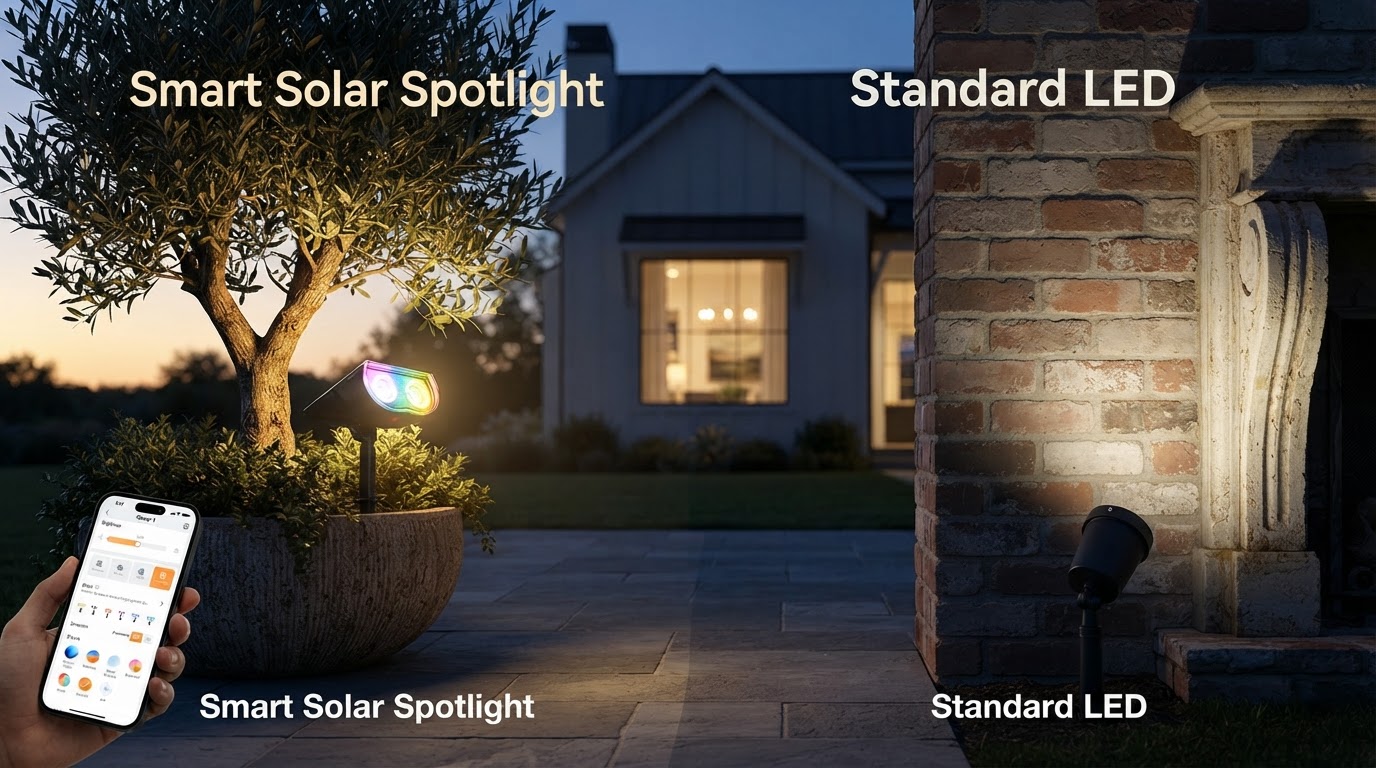
How does a Smart Solar Spotlight compare to standard LEDs?
 Jordan HaleStaff Writer
October 5, 2026 — The Smart Solar Spotlight outperforms standard LED landscape lights by integrating Maximum Power Point Tracking (MPPT) technology and Bluetooth-based app control, though it requires strategic placement for optimal battery charging compared to wired alternatives.
I remember crouching in the damp grass last Tuesday, the sun dipping below the oak trees, holding a Linkind SL5C in one hand and a traditional hardware-store solar stake in the other. The weight difference was the first thing I noticed; the smart unit felt substantial, housed in a casing that didn't creak under the pressure of my grip. Homeowners are increasingly moving toward these systems not just for the light, but for the granular control over color temperature and scheduling that old-fashioned "dusk-to-dawn" sensors simply cannot provide.
How does MPPT technology improve Smart Solar Spotlight performance?
MPPT technology allows a Smart Solar Spotlight to extract the maximum possible power from its solar panel even in low-light conditions, significantly increasing charging efficiency over standard PWM controllers. When I set up the Linkind SL5C, I watched it maintain a steady output even as the afternoon turned overcast. According to TechMagnet's review of the SL5C, this unit is recognized as a significant advancement in the field because it utilizes MPPT to ensure the light stays brighter for longer durations regardless of minor weather shifts. Standard solar lights often flicker or dim prematurely because they lack the sophisticated circuitry to manage fluctuating voltage from the panel. By contrast, these smart systems optimize the conversion of energy into the internal battery, which is essential when you are trying to highlight a specific architectural feature or a tall tree throughout the night.
Can app control replace traditional timers in solar lighting?
App control in systems like the Smart Solar Spotlight replaces physical timers and manual switches with a digital interface that allows for 16 million color options and precise scheduling. Somewhere around week two of testing the Linkind SL6C, I realized I hadn't touched the physical power button once; every adjustment happened through the AiDot app on my phone. Linkind notes that their Smart Solar Spotlights SL6C feature both app and voice control, allowing users to group multiple lights together for synchronized color changes. This is a stark departure from standard LEDs that require you to walk to each individual fixture to change a lens or flip a toggle. The ability to dim the lights to 10% for a quiet evening or flash them during a backyard gathering adds a layer of utility that traditional solar stakes never offered. It turns out that having the power to adjust the warmth of the light to match the changing seasons makes the landscape feel like a living part of the home rather than just a static backdrop.
Quick answers
Q: Do smart solar spotlights work with Alexa or Google Home? A: Yes, models like the Linkind SL6C are compatible with voice assistants through the AiDot app, though they often require a dedicated smart hub for full remote functionality. This allows for hands-free operation of your voice control smart solar spotlight setup alongside other home automation.
Q: What is the waterproof rating for a high-quality Smart Solar Spotlight? A: Most premium units, including the Linkind Smart Solar Spotlight series, carry an IP66 waterproof rating, which means they are protected against heavy seas or powerful jets of water. This ensures durability during intense rainstorms that might compromise cheaper, non-smart alternatives.
Q: How many colors can a Smart Solar Spotlight display? A: A typical Smart Solar Spotlight, such as the Linkind SL6C, offers approximately 16 million color variations. This allows for specific smart solar spotlight performance tuning to match holiday themes or specific garden foliage.
Q: How long does the battery last on a full charge? A: While it varies by brightness setting, high-end smart spotlights with 1.8w solar panels can often run for 6 to 12 hours. The stability of this output is largely due to the MPPT technology mentioned in Smart Solar Spotlight technical specifications.
Learn more about Smart Solar Spotlight at https://smartsolarspotlight.com.
Sources
- Outdoor Spotlights & Solar Landscape Lighting - Linkind
- Best Smart solar lights?! My FULL Review: AiDot Linkind ... - YouTube
- Linkind Smart Solar Pathway Lights SP6C, APP Control Solar ... - AiDot