Optimal Solar Panel Tilt Angle & Placement Guide for Smart Solar Spotlights
Contrary to the widespread myth that flat panels collect the most solar energy, placing solar panels horizontally reduces autumn and winter energy absorption by up to 45%. In the Northern Hemisphere, the optimal solar panel tilt angle equals your local US latitude ±5° tilted toward True South. Articulate the solar panel independently to this angle while aiming the LED spotlight beam at targets positioned 5 to 7 feet away.
Dual-Axis Articulation: Solar Panel vs. Light Beam Angle
High-efficiency smart solar spotlights utilize dual-axis articulation. This allows the photovoltaic panel to face True South at your optimal latitude angle while the light head independently points in any direction toward your landscaping features.
US Regional Tilt Angle Scenarios (Latitude Alignment)
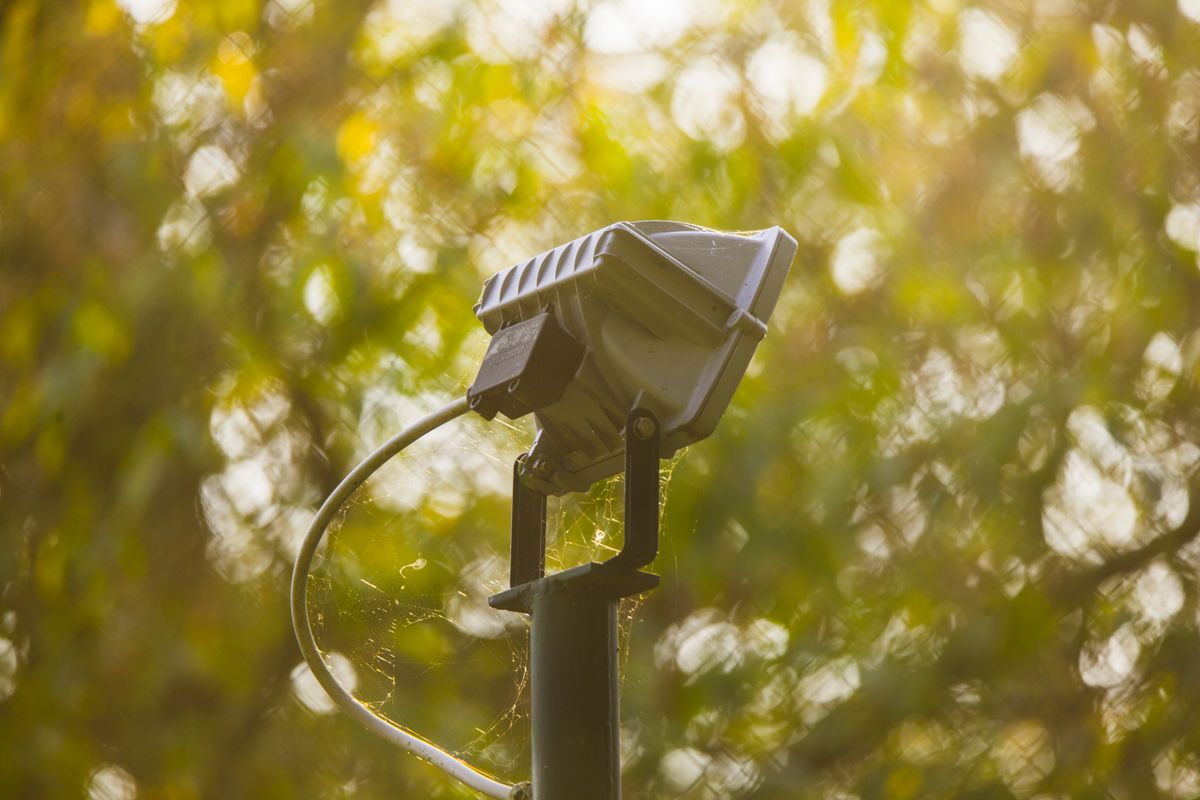
Photo by Francesco Paggiaro on Pexels
Southern US (Latitudes 25°N – 35°N: Florida, Texas, Southern California) — Set solar panel tilt angle to 30° from horizontal, facing True South. High sun elevation provides strong solar harvest; clean glass monthly to prevent pollen film buildup.
Central US (Latitudes 35°N – 42°N: Virginia, Kansas, Northern California) — Set solar panel tilt angle to 38° from horizontal, facing True South. This mid-range pitch balances longer summer daylight with low-angle winter sunlight.
Northern US (Latitudes 42°N – 49°N: Washington, Minnesota, New York) — Set solar panel tilt angle to 45° from horizontal, facing True South. Steep angles optimize capture of low horizon solar rays during winter months and allow snow to slide off effortlessly.
Adjusting your solar lighting angles based on your geographic zone ensures maximum daily milliamp-hour (mAh) storage in internal batteries.
Solar Charging & Runtime Troubleshooting Matrix
| Symptom / Scenario | Root Cause | Corrective Action | Expected Outcome |
| --- | --- | --- | --- |
| Spotlight shuts off after 2-3 hours of illumination | Undercharged battery due to incorrect panel tilt or midday tree shade | Re-align panel to Latitude ±5° facing True South; trim overhanging branches | Full 8-12 hour nightly runtime restored |
| Spotlight flickers or turns off when driveway or porch light turns on | Ambient photocell interference fooling sensor into daylight mode | Relocate spotlight at least 15 feet away from bright fixed ambient lights | Stable night-long illumination without flickering |
| Spotlight does not illuminate at dusk despite full sun exposure | Outdated mobile app firmware or disabled schedule mode | Update Aidot app to version 2.5.0 and verify dusk-to-dawn automation profile | Automated dusk activation with custom RGBTW scenes active |
| Light output appears dim during mid-winter months | Reduced solar peak hours and excessive LED brightness demand | Use Aidot app v2.5.0 to dim output to 50-70% or schedule late-night dimming | Extended night runtime during low-sun seasonal periods |
Diagnose and resolve common smart solar lighting operational issues using this field checklist.
5 Solar Spotlight Placement Mistakes That Destroy ROI
Avoid these critical installation mistakes to protect your lighting investment and guarantee night-long security coverage:
US Zone Guidelines: Adjusting for Latitude and Winter Sun
- Northern US & Pacific Northwest (Zone 4 - 6) — Set tilt to 45° to catch low winter sun. In late autumn, check for leaf obstruction on solar glass. Use Aidot app v2.5.0 to lower static brightness to 60% between November and February to preserve battery health.
- Mid-Atlantic & Midwest (Zone 6 - 7) — Target a 38° tilt angle facing True South. Ensure clear southern exposure free from fence or garage shadows during the peak charging window of 10:00 AM to 3:00 PM.
- Sunbelt & Southwest (Zone 8 - 10) — Set panel tilt to 30°. Dust and pollen accumulation can degrade charging efficiency by 15-20%; wipe panel lenses with a micro-fiber cloth during seasonal yard tune-ups.
Visual Gallery: Staggered Pathway & Landscape Spot Placement
Review ideal physical layouts for architectural accenting, tree uplighting, and staggered pathway illumination.
Your 4-Step Solar Spotlight Setup Plan
Your decision: Determine your precise local latitude and select South-facing, shadow-free installation points in your yard.
Do this next: Mount or stake your smart solar spotlights facing true South at Latitude ±5°, position the light optics 5-7 feet from focal objects, and update the Aidot app to v2.5.0 to set dimming schedules.
- Read next: Seasonal Solar Spotlight Tilt Adjustments: Winter vs. Summer Optimization Guide
- Read next: How to Plan Staggered Pathway & Landscape Lighting Spacing for Maximum Coverage
Linkind SL5C Smart Solar Spotlight (Multi-Pack) - Featuring RGBTW Color-Changing LEDs, IP67 Waterproofing, and Dual-Axis Articulation.
Follow this execution workflow to optimize your outdoor smart lighting setup today.
Key Placement Rules for Maximum Battery Lifespan
- Latitude Match: Set solar panel tilt angle to your local US latitude ±5° facing True South.
- Independent Articulation: Rotate the solar panel toward the sun and point the spotlight optics toward landscape focal points independently.
- 5 to 7 Foot Rule: Position spotlights 5–7 feet away from walls, bushes, and features for optimal beam spread.
- 15-Foot Ambient Buffer: Keep fixtures at least 15 feet away from porch lights and streetlamps to prevent light sensor shut-off.
- Staggered Path Layout: Stagger pathway spotlights on alternating sides of walkways for balanced brightness without shadow gaps.
- Firmware Management: Keep the Aidot app updated to version 2.5.0 for low-power winter dimming modes.
Printable Field Cheat Sheet: Solar Tilt & Spacing Rules
- Southern US Tilt: 30° True South
- Central US Tilt: 38° True South
- Northern US Tilt: 45° True South
- Distance from Target Wall / Feature: 5–7 Feet
- Distance from Overhead Eaves / Tree Shade: 5+ Feet clear radius
- Distance from Alternate Ambient Light Sources: 15+ Feet minimum
- Pathway Stagger Interval: 6–8 Feet apart along opposite sides of path
- App Setup: Update Aidot App to v2.5.0 for scene sync & scheduled dimming
Solar Spotlight Tilt & Runtime Calculator
Use this interactive calculator model to estimate nightly lighting runtime based on panel angle precision and brightness settings.
Charging Efficiency Matrix: Flat vs. Latitude Tilt vs. Shaded
| Installation Setup Scenario | Daily Solar Absorption Efficiency (%) | Average Daily mAh Charge Harvest | Nightly Runtime (at 80% Brightness) | 5-Year LED Battery Lifespan Outlook |
| --- | --- | --- | --- | --- |
| Optimal Latitude Tilt (Latitude ±5° South) | 100% (Baseline) | 2,200 mAh | 11.5 Hours (Dusk to Dawn) | Optimal (5+ Years) |
| Flat Horizontal Mounting (0° Tilt) | 62% | 1,364 mAh | 6.8 Hours | Moderate (Deeper daily discharge cycles) |
| Off-Axis Orientation (Facing North) | 45% | 990 mAh | 4.5 Hours | Reduced (Accelerated battery strain) |
| Partial Tree / Eave Shade (2+ Hrs Midday Shade) | 35% | 770 mAh | 3.2 Hours | Poor (Frequent dropouts in winter) |
This comparative benchmark illustrates how physical angle alignment and shading affect daily energy capture and nightly runtime performance.
Expert Tip: Power Scheduling with Aidot App v2.5.0
To achieve reliable year-round illumination—even during winter storm weeks—leverage the smart automation capabilities in Aidot app version 2.5.0. Instead of running your spotlights at 100% full brightness all night, set a dynamic brightness schedule: 100% brightness from dusk until 10:00 PM (when visual impact matters most), auto-dimming to 30% from 10:00 PM until 5:00 AM, and ramping back to 70% during pre-dawn hours. This intelligent power profile reduces battery draw by over 40% while maintaining uninterrupted perimeter security.
Related Guides on Smart Solar Lighting Optimization
- How to Optimize Solar Spotlight Charging in Winter & Cloudy Weather: Panel Tilt & Maintenance Guide
- How to Fix Undercharging Smart Solar Spotlights: Panel Tilt & Alignment Troubleshooting
- Troubleshooting Solar Spotlight Charging: Panel Angles, Micro-Shadows, and Sensor Interference
Frequently Asked Questions
Get rapid answers to essential questions regarding solar spotlight installation, angles, and app features.
Recommended Equipment for High-ROI Solar Spotlighting
Upgrade your outdoor security and landscape aesthetics with smart solar spotlight technology built for long-term outdoor performance.
Cover photo by Marius-Laurentiu Butan on Pexels.