IP67 vs. IP65 Solar Lights for Rain and Snow: Which Weatherproof Rating Is Best for Home Security?
Should you install IP65 or IP67 smart solar spotlights for year-round backyard security in wet and snowy climates?
For ground-level outdoor security, choose IP67 solar spotlights over IP65. While IP65 fixtures only protect against low-pressure water jets, IP67 withstands temporary immersion up to 1 meter—preventing total circuit failure when ground-mounted lights get submerged in melting snowpack, mud, or standing rainwater puddles.
IP65 vs. IP67 Performance Breakdown in Real-World Winter Scenarios
| Outdoor Environmental Scenario | IP65 Rating Performance | IP67 Rating Performance | System Reliability Risk |
| --- | --- | --- | --- |
| Standing Snowpack Melt (2–6 Inches) | High failure rate; foam seals leak when submerged under melting slush | Fully protected; withstands 1-meter temporary submersion up to 30 minutes | Critical Risk for IP65 ground stakes |
| Driven Downpours & Wind Storms | Resists low-pressure rain jets (12.5 L/min at 30 kPa) | Resists high-volume wind-driven rain and pressure surges | Low Risk for IP65; Zero Risk for IP67 |
| Saturated Clay Soil & Mud Pooling | Silt and muddy water seep past press-fit housing seams | Continuous silicone O-ring blocks micro-silt and groundwater ingress | High Risk for ground-level IP65 fixtures |
| Freeze-Thaw Thermal Contraction | Gaskets shrink in sub-zero temps, breaking the liquid seal | Molded silicone compression gaskets retain elasticity across temperature swings | High Risk for seasonal lens fogging in IP65 |
| Direct Lawn Sprinkler Impact | Passes standard residential sprinkler spray tests | Withstands direct nozzle pressure and immediate ground runoff | Low Risk across both ratings |
Standard laboratory water tests do not account for localized outdoor micro-climates. Ground-mounted spotlights face unique hydrostatic pressures, standing groundwater, and freeze-thaw cycles that push ingress protection to its limits.
Failure Modes & Trade-offs: IP65 vs. IP67 Outdoor Fixtures
Pros
- IP67 fixtures feature continuous silicone O-rings that prevent internal driver short-circuiting during ground flooding.
- IP67 housings prevent atmospheric moisture entry, eliminating internal lens condensation and fogging.
- IP67 solar spotlights survive deep winter snowpack burial without requiring seasonal uninstallations.
- IP65 fixtures offer a lower upfront cost for elevated, eave-protected wall mount installations.
- IP65 press-fit foam gaskets degrade rapidly under thermal contraction during sub-zero freeze-thaw cycles.
- IP65 ground stakes fail when surrounded by standing snow melt over 1 inch deep due to lack of submersion protection.
- Capillarity in IP65 seam gaps draws standing water directly into the battery housing during thaw periods.
Top Recommendation for All-Weather Home Security
The Linkind SL5C Smart Solar Spotlight is our benchmark recommendation for homeowners needing resilient, all-weather perimeter defense.
Expert Field Tip: Protecting Solar Spotlight Seals Against Freeze-Thaw Stress
To maximize the lifespan of your smart solar spotlights in harsh winter environments:
IP Selection Flowchart: Which Rating Fits Your Regional Weather?
- Is the spotlight mounted on an elevated wall under roof eaves? → Yes: IP65 is sufficient (Protected from direct submersion and ground runoff).. No: Proceed to the next question for ground installations.
- Does your region receive winter snow accumulation greater than 2 inches? → Yes: IP67 Required (Snowpack melt creates standing immersion zones around ground stakes).. No: Proceed to soil drainage evaluation.
- Is the light placed in clay soil or low-lying garden beds prone to standing puddles? → Yes: IP67 Required (Ground runoff will submerge the lower housing seams during heavy storms).. No: IP65 is acceptable for elevated lawn areas with fast sandy-loam drainage.
Key Takeaways: IP67 vs. IP65 for Outdoor Security Lighting
Summary of critical engineering facts every homeowner should know before purchasing outdoor solar landscape lights.
Ingress Protection Technical Specification Matrix
| Specification Category | IP65 Standard Definition | IP67 Standard Definition | Outdoor Security Impact |
| --- | --- | --- | --- |
| First Digit: Solids (6) | Dust-tight; complete protection against contact and particulates | Dust-tight; complete protection against contact and particulates | Both prevent fine dirt and micro-silt from coating internal LED lenses |
| Second Digit: Liquids (5 vs 7) | Water projected by a 6.3mm nozzle (12.5 L/min) from any angle | Immersion up to 1 meter depth for 30 minutes duration | IP67 survives ground submersion; IP65 fails when standing water covers housing seams |
| Internal Sealing Mechanism | Flat foam tape or press-fit plastic tongue-and-groove | Molded continuous silicone O-rings with compression screws | IP67 maintains elastomeric tension during zero-degree winter freezes |
| Lens Moisture Resistance | Permeable to atmospheric vapor during rapid temp drops | Hermetically sealed against moisture vapor condensation | IP67 keeps glass clear for maximum lumen output and motion sensor range |
The International Electrotechnical Commission (IEC 60529) defines IP codes based on strict laboratory ingress criteria. Here is how the digits translate to practical outdoor durability.
Decision Framework: Matching IP Ratings to Installation Locations
Ground-level lighting requires higher ingress protection than elevated wall fixtures due to hydrostatic pressure from water pooling and snow accumulation.
Best choice for
- IP67 Smart Solar Spotlight — Prevents groundwater intrusion from mud splatter, lawn sprinklers, and melting snowpack.
- IP65 Solar Fixture — Elevated mountings experience wind-driven rain but zero risk of standing water submersion.
- Do not install IP65 fixtures in low-lying lawn depressions where rainwater pools for more than 15 minutes after a storm.
- Do not place ground lights directly beneath un-guttered roof drip lines without IP67 seals, as heavy water drops break low-pressure foam gaskets.
- Hardwired Low-Voltage Floodlights — Requires expensive trenching and conduit, whereas IP67 solar spotlights install in minutes with zero electricity cost.
Recommended Outdoor Smart Solar Spotlight Packages
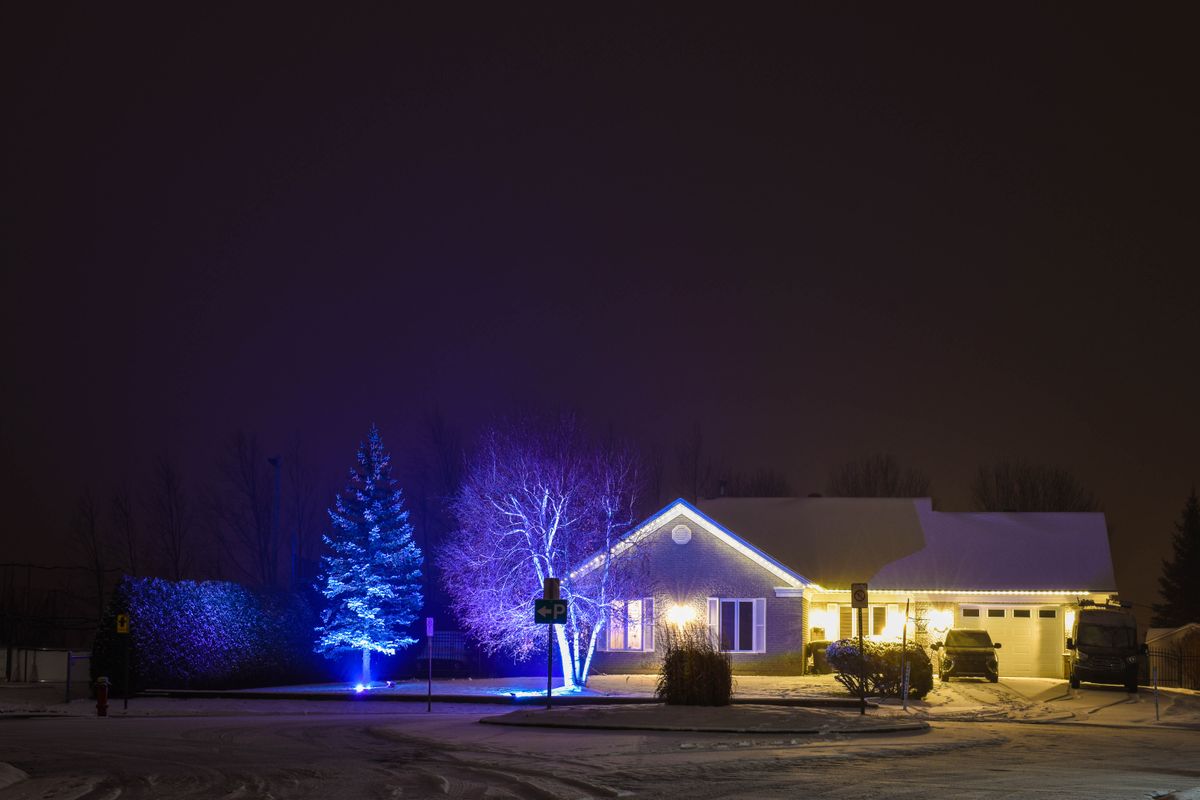
Photo by Marius-Laurentiu Butan on Pexels
Selecting the right pack size ensures uniform coverage across your driveway, garden pathways, and yard perimeter.
Real-World Winter Failure Scenarios & Prevention
Melting Snowbank Submersion — When a 4-inch snowpack melts, water pools around the stake base faster than clay soil can absorb it. An IP65 foam gasket absorbs moisture, leading to internal short circuits. Switch to IP67 fixtures with molded silicone O-rings that block liquid entry even under continuous 30-minute immersion.
Sub-Zero Freeze-Thaw Lens Fogging — Daytime warmth expands air inside IP65 housings; night freezes pull moist outdoor air through microscopic seam gaps. Moisture condenses inside the lens, clouding light output. Hermetically sealed IP67 housings lock out atmospheric moisture vapor entirely.
De-Icing Salt & Mud Corrosion — Salty slush splashed from driveways degrades inferior rubber seals within one season. Ensure your smart solar spotlights use weather-resistant polycarbonate bodies and IP67 silicone gaskets to withstand corrosive winter road salt.
Laboratory tests use fresh water at room temperature. Real winter conditions involve harsh chemical runoff, freezing temperatures, and extended submersion.
The core technical difference between IP65 and IP67 lies in housing construction and gasket mechanics.
The Mechanics of IP65 Water Jet Seals
Most budget solar spotlights achieving an IP65 rating rely on flat EVA foam tape or press-fit plastic tongue-and-groove joints. During laboratory testing, a nozzle sprays water at 30 kPa from a 3-meter distance. The flat surface tension of the foam deflects short bursts of moving water. However, when standing water surrounds the fixture, capillary action draws water past the foam boundary. Furthermore, sub-zero cold causes plastic housings to shrink, creating micro-gaps that destroy the IP65 seal.Why IP67 Molded Silicone O-Rings Prevail
IP67-rated fixtures like the Linkind SL5C Smart Solar Spotlight utilize custom-molded silicone O-rings set inside precision-machined retention grooves. When assembly screws compress the housing, the silicone deforms elastomeric pressure against both walls, creating an airtight, liquid-tight barrier.Silicone retains its flexibility down to -40°F (-40°C), meaning freeze-thaw cycles do not cause gap formation. Whether subjected to heavy downpours or buried in melting winter snow, an IP67 housing resists hydrostatic pressure down to 1 meter (3.3 feet) for at least 30 minutes, keeping internal lithium batteries and smart circuit boards completely dry.
Related Outdoor Lighting & Solar Optimization Guides
- What Does an IP67 Waterproof Rating Mean for Outdoor Solar Landscape Lighting?
- Smart Solar Outdoor Lights FAQ: Charging, Waterproofing, and App Control
- How do Smart Solar Spotlight apps control yard lighting?
Frequently Asked Questions: IP Ratings, Rain, and Winter Snow
Get fast, direct answers to common questions about winterizing outdoor smart solar lighting.
Actionable Next Steps for Winterizing Your Outdoor Lighting Setup
Your decision: Choose IP67-rated solar spotlights for all ground-level landscape mounting to protect against snow melt immersion, heavy mud runoff, and standing groundwater.
Do this next: Audit your outdoor perimeter, measure mounting distances (5-7 feet from target structures), and replace vulnerable ground-level IP65 fixtures with submersible IP67 smart units.
- Read next: Seasonal Solar Spotlight Tilt Adjustments: Winter vs. Summer Optimization Guide
- Read next: What Does an IP67 Waterproof Rating Mean for Outdoor Solar Landscape Lighting?
Linkind SL5C Smart Solar Spotlight 4-Pack (IP67 Waterproof, RGBTW Color Changing)
Follow this practical checklist to upgrade your property's perimeter lighting for severe winter weather.
Mechanical Sealing Differences: O-Rings, Gaskets, and Pressure Relief
Explain physical internal engineering that differentiates IP65 from IP67.
Cover photo by Nothing Ahead on Pexels.