
Smart Solar Spotlights vs. Low-Voltage Hardwired Pathway Lighting
Should you buy smart solar spotlights or low-voltage hardwired lighting? Choose smart solar spotlights if you want zero electric costs, rapid DIY installation, and mobile app-controlled RGBTW color scenes without yard trenching. Opt for low-voltage hardwired lighting only if your pathway sits under permanent, heavy shade and requires fixed-wire transformer power.
Scenario-Based Feature Comparison Matrix
| Scenario / Use Case | Smart Solar Spotlights (e.g., Linkind SL5C) | Low-Voltage Hardwired Systems (12V) | Winning Solution |
| --- | --- | --- | --- |
| Open Sunlit Pathway / Garden Bed | Zero operating cost; 5-minute ground stake setup; solar panel charges integrated battery fully in 6-8 hrs direct sun. | Requires 120V GFCI outlet, step-down transformer, and 100+ ft buried 12/2 low-voltage cable trenching. | Smart Solar Spotlights |
| Heavily Shaded Dense Tree Canopy | Insufficient solar charging reduces night runtime unless moved to adjacent sunny spots. | Constant grid power guarantees 100% illumination regardless of overhead canopy density. | Low-Voltage Hardwired |
| Holiday & Event Scene Customization | Full RGBTW spectrum control via Aidot App (v2.5.0); customizable schedules, light scenes, and music sync. | Monochromatic static warm white (2700K-3000K); changing colors requires physical lens color filter replacements. | Smart Solar Spotlights |
| Rental Property or Seasonal Relocation | 100% portable; pull stake from soil and reinstall elsewhere in under two minutes without lawn damage. | Permanent infrastructure; leaving requires digging up buried wire runs or abandoning buried assets. | Smart Solar Spotlights |
| Heavy Rain, Snow Melt & Soil Saturation | IP67 waterproof rating allows full temporary submersion in mud/water puddles without shorting. | IP65 fixtures resist rain, but subterranean wire splices risk corrosion or ground-fault trips in soaked soil. | Smart Solar Spotlights |
| Perimeter Security & Automated Scheduling | Automated dusk-to-dawn sensors combined with Bluetooth/Wi-Fi smart app automation schedules. | Requires purchasing separate plug-in mechanical timers, photocells, or hardwired smart switches. | Smart Solar Spotlights |
Compare how smart solar spotlights and low-voltage hardwired lighting perform across critical real-world installation scenarios.
Detailed System Failure Modes, Pros & Cons
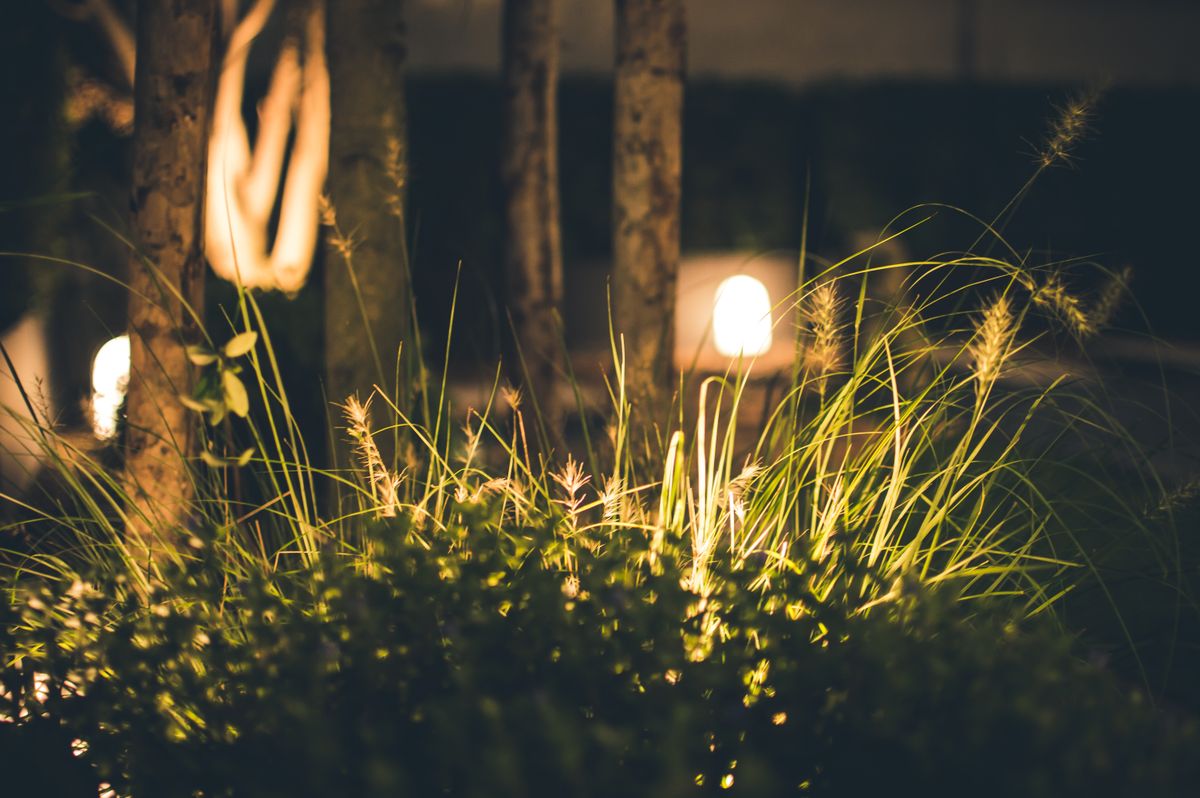
Photo by suzukii xingfu on Pexels
Before selecting a landscape lighting architecture, evaluate primary failure modes. Understanding how each system degrades or fails ensures realistic long-term expectations for your property.
System Architecture & Installation Workflow
Visualizing the structural difference between wireless solar setups and hardwired trenching highlights the difference in physical labor and technical tools required.
5-Year Total Cost of Ownership & ROI Calculator
Use this layout framework to project upfront capital expenses, labor requirements, and ongoing grid electricity draw over a 5-year period.
Outdoor Lighting System Selection Flowchart
- Does your target pathway or garden bed receive at least 4-6 hours of unshaded sun daily? → Yes: Proceed to Question 2. No: Select Low-Voltage Hardwired Lighting (Solar panels cannot maintain full night charge in deep shade).
- Do you want dynamic RGBTW color changing, custom holiday scenes, and smartphone app control? → Yes: Select Smart Solar Spotlights (e.g., Linkind SL5C with Aidot App v2.5.0).. No: Proceed to Question 3
- Are you willing to trench lawn soil, run underground cables, and wire a 12V power transformer? → Yes: Select Low-Voltage Hardwired Lighting. No: Select Smart Solar Spotlights (Zero trenching, tool-free ground stake setup).
Essential Takeaways for Homeowners
Keep these key principles in mind when planning your outdoor lighting upgrade.
Which System Fits Your Yard & Lifestyle?
Smart solar spotlights represent the optimal choice for 85% of residential landscape projects due to rapid tool-free installation, zero energy overhead, high IP67 weather resistance, and dynamic Aidot app scene control.
Best choice for
- Smart Solar Spotlights — Eliminates trenching, permits, professional electrician fees, and permanent lawn modification.
- Smart Solar Spotlights (Linkind SL5C) — Provides instant RGBTW color shifting, tunable white temperatures, and music synchronization via Aidot App.
- Smart Solar Spotlights with Staggered Spacing — Delivers automatic dusk-to-dawn illumination across walkways without risk of cut buried wires.
- Avoid solar spotlights if your installation zone sits permanently under dense, sun-blocking roof eaves or dense evergreen shade receiving under 3 hours of ambient daylight.
- Avoid basic low-voltage lighting if you want color-changing lights or mobile app controls without spending thousands on hardwired smart home integration modules.
- Hybrid Approach — Use low-voltage fixtures for dark north-facing architectural alcoves and deploy Smart Solar Spotlights along expansive sunny pathways and open garden beds.
Top Smart Solar Spotlight Solution

Photo by Alexas Fotos on Pexels
For homeowners seeking high performance, rugged durability, and smart controls, the Linkind SL5C Smart Solar Spotlight stands out as the premier market choice.
Real-World Installation Scenarios: How Each System Performs
Spring Lawn Aeration and Edging — Smart Solar Spotlights win. Low-voltage cables buried 3-6 inches beneath lawn edges are frequently sliced by mechanical lawn edgers, deep core aerators, or hand shovels. Slicing a low-voltage wire kills power to every light downstream. Smart solar spotlights operate completely wirelessly, making lawn maintenance risk-free.
Winter Freeze & Heavy Snow Accumulation — Smart Solar Spotlights perform exceptionally well when adjusted properly. By setting the solar panel tilt angle to your local latitude +5° to +10° in winter, the panel sheds snow quickly and catches the lower southern sun. IP67-rated housings prevent water ingress during freeze-thaw snowmelt cycles.
Suburban Front Walkway Upgrade Before House Sale — Smart Solar Spotlights win on speed and return on investment. Installing a hardwired system costs $1,200-$2,500 in contractor fees and takes days. A multi-pack of smart solar spotlights can be staked in a staggered pattern 5-7 feet apart in under 30 minutes, boosting curb appeal immediately.
Examine how each lighting system behaves under real domestic environmental conditions.
When comparing modern outdoor illumination, the contrast extends beyond how power is delivered. The fundamental difference lies in system control, optical flexibility, and long-term durability.
App-Driven Ecosystems vs. Mechanical Transformers
Traditional low-voltage landscape lighting relies on a centralized step-down transformer converting 120V household current to 12V AC. While reliable, this architecture is static. To adjust brightness or lighting schedules, homeowners must open the transformer box and manipulate dial timers or basic mechanical switches. Adding color requires snapping glass lenses over each hot fixture.In contrast, modern smart solar spotlights like the Linkind SL5C integrate wireless control directly into each fixture. Powered by the Aidot App (version 2.5.0 or higher), users can program individual fixtures or grouping zones from their smartphone. The RGBTW (Red, Green, Blue, Tunable White) LED chipsets allow seamless transitions from functional security lighting (4000K crisp white) to warm evening accenting (2700K), or vibrant color themes for holidays and outdoor parties. Integrated music sync modes transform backyard patios by pulsing light in time with music.
Solar Panel Angling & Optimal Photovoltaic Yield
A common misconception is that solar lights perform poorly in northern latitudes. Solar energy conversion depends directly on panel tilt angle and solar positioning. In the Northern Hemisphere, setting your solar panel tilt angle at approximately your local latitude (±5°) maximizes total annual photon capture. In winter months, tilting the panel slightly steeper towards the southern horizon compensates for lower solar elevation.To ensure complete daily battery replenishment:
- Avoid placing solar panels in permanent shadows cast by roof soffits, tall fences, or dense evergreen shrubs.
- Avoid installing spotlights directly underneath bright municipal streetlights or high-wattage floodlights, as ambient light can prematurely switch off the internal auto-dusk optical sensor.
Waterproof Architecture: Demystifying IP67 vs. IP65
Outdoor lighting fixtures live at ground level, where water management is critical. Traditional low-voltage wire connectors buried under wet soil often oxidize, leading to circuit dropouts.For solar fixtures, the IP (Ingress Protection) rating defines internal component sealing:
- IP65 Rated: Protected against dust and low-pressure water jets from any angle (standard rain shower protection).
- IP67 Rated: 100% dust-tight and fully protected against the effects of temporary water submersion (up to 1 meter deep for 30 minutes).
Optimal Placement & Staggered Pathway Lighting Layouts
To achieve professional-grade landscape aesthetics without creating visual hot spots or dark voids, follow a staggered layout approach. Rather than lining spotlights in rigid parallel rows along a sidewalk—which creates a runway effect—place fixtures on alternating sides of the pathway spaced 5 to 7 feet apart. Angle each spotlight 5 to 7 feet away from focal objects such as ornamental trees, stone masonry walls, or garden statues to create depth, shadow contrast, and uniform walkway visibility.Frequently Asked Questions
Answers to common homeowner questions regarding smart solar spotlights and low-voltage lighting systems.
Next Steps & Action Plan
Your decision: Choose Smart Solar Spotlights for modern, low-cost, high-versatility outdoor lighting without lawn destruction.
Do this next: Measure your pathway length, identify sunny installation spots free from tree shadow, and determine how many light fixtures are needed for a staggered layout.
- Read next: How to Create a Staggered Pathway Lighting Layout for Depth and Safety
- Read next: Buyer's Guide: Selecting Smart Solar Walkway Lighting for Security and Style
Linkind SL5C Smart Solar Spotlight (Multi-Pack) for immediate DIY walkway lighting upgrade.
Follow this practical guide to transition your property's outdoor lighting to smart solar technology.