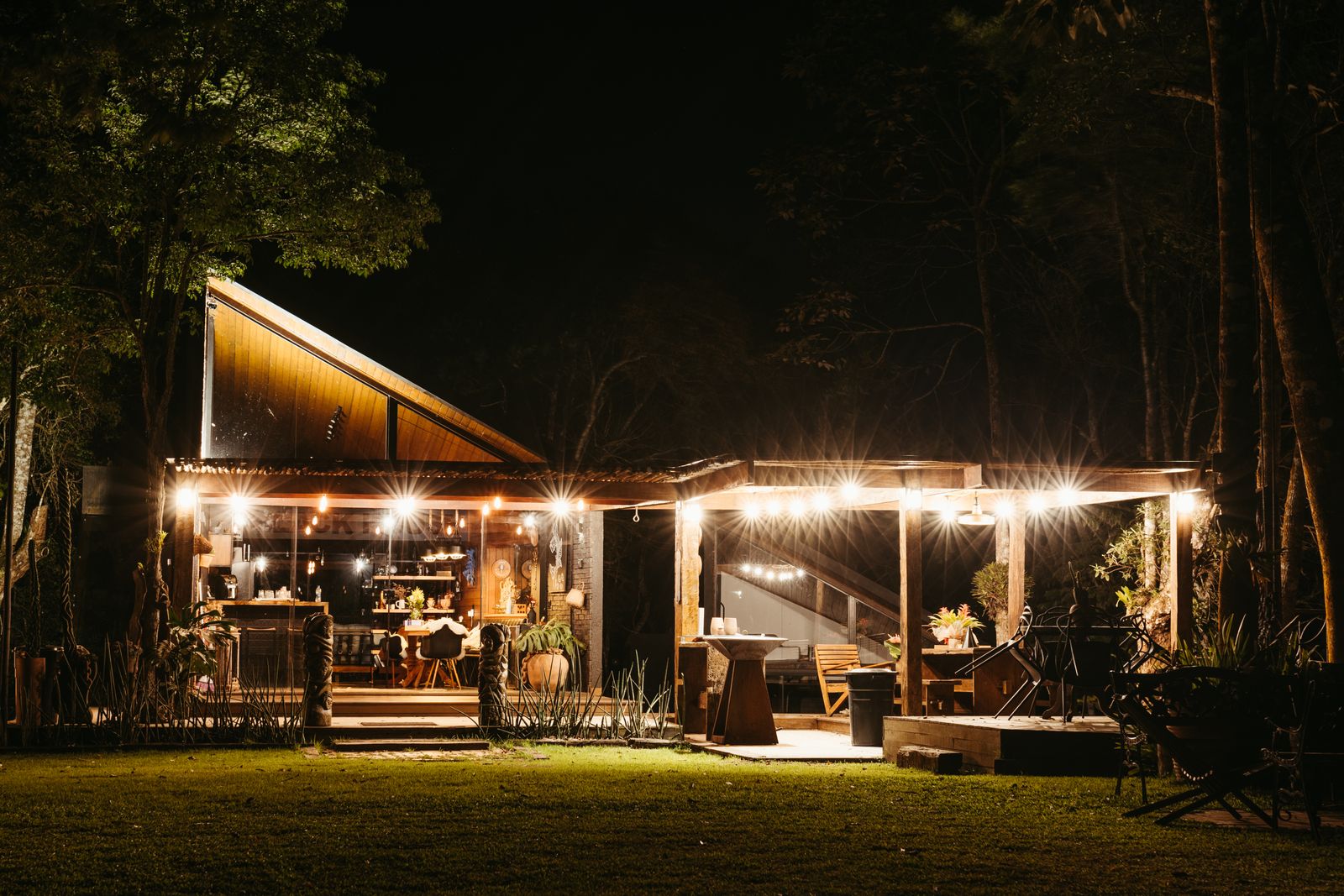
Outdoor Pathway Hazard Reduction FAQ: Illuminating Steps, Yards, and Borders
Outdoor pathway hazard reduction is lighting the things people trip on: steps, edges, borders, and material changes, not flooding the lawn. Place Linkind SL5C Smart Solar Spotlights 5-7 feet from those surfaces, stagger them along the route, and run a warm-white Aidot scene at a readable brightness. 350 lumens is enough when the beam hits the nosing. IP67 keeps the fixture in weather. A shaded panel that dies at 10 p.m. puts the hazard back in the dark.
Hazards are height changes and edges
The dangerous parts of a yard are rarely the middle of a flat lawn. They are the single step off a deck, the border timber that sits an inch up, the gravel-to-paver joint, the turn where a walk meets a drive. Mark those before marking pretty plants.
Each mark gets a directed 350-lumen beam from 5-7 feet. The beam should graze the riser or the edge so the height change is visible as a line, not as a glare bomb in the walker's eyes.
The guide to installing smart solar spotlight driveway lighting covers a related circulation job. This FAQ is the trip-hazard rule set for steps, yards, and borders.
White light is the safety scene
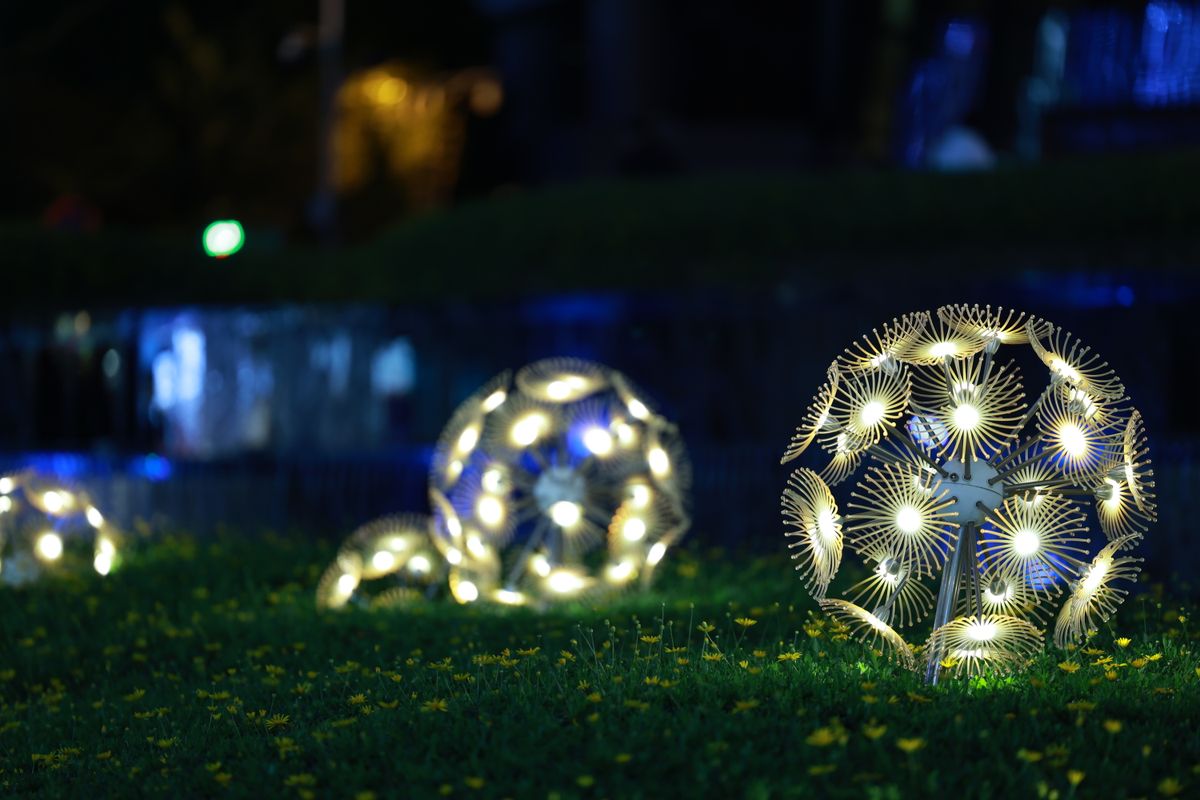
RGBTW is a strength of the SL5C, and it is the wrong standing mode for a step. Saturated color hides contrast on wet stone. Save color scenes and music sync for gatherings, then return to adjustable white and a moderate brightness in Aidot 2.5.0.
Color temperature can go warm for brick and wood so the edge still looks like an edge, not like a nightclub. Brightness should be high enough to read a lip and low enough that the walker is not staring into the chip.
Security here means a visible route.
Stagger so the gap is not the trap
A staggered path lighting approach for uniform illumination keeps the center of the walk out of a dark trough. Pairs across the path look formal and hide the next lip in the trough. Alternate sides, overlap at every stair, and do not leave a long unlit border because the planting looked cleaner without a stake.
Yard borders that people cut across at night need a line of light along the edge, still at 5-7 feet, still with panels in sky. A single lamp at the corner of a large yard does not protect the middle of that border.
DIY install at $0 estimated cost means a stake can move after the first guest night. If someone still misreads a step, the beam missed the nosing. Move it.
A dead light is a new hazard
People learn a route from the lamps. When a shaded panel fails at 10 p.m., the step they trusted is gone. Avoid shadowed solar panels. Avoid strong light sources on the face. Tilt to local latitude plus or minus 5 degrees so the 8-12 hour runtime is real.
IP67 is why the fixture can stay out in rain. Rain is when edges are most slippery and most in need of light. Do not bring safety lamps inside for a storm.
Replace a unit that no longer holds a night rather than leaving a dark socket in the stagger.
Hazard points and the lighting job
| Hazard | What to light | Layout note | | --- | --- | --- | | Single deck step | Riser and nosing from 5-7 ft | Overlap; do not backlight the walker | | Stair run | Each landing plus intermediate nosings | One lamp at the top is not enough | | Path edge / timber border | The raised line along the route | Stagger so the center still reads | | Yard shortcut in the dark | The ground people actually cross | A corner lamp does not cover the middle | | Drive-to-walk joint | The material change underfoot | Aim across, not down the driveway glare line |
Yards are not only paths
A side yard that leads to cans, a dog run, or a gate is a pathway even if it is grass. Treat it as circulation. 350 lumens at 5-7 feet will mark a hose, a toy, or a grade change if the beam is pointed at the ground people use.
Directed spots on the actual walking line are the job, not a flood of the whole lawn. Solar powered with no extra electric cost means the safety run can stay on every night. The constraint is whether each panel can charge.
Pathway hazard-reduction checklist
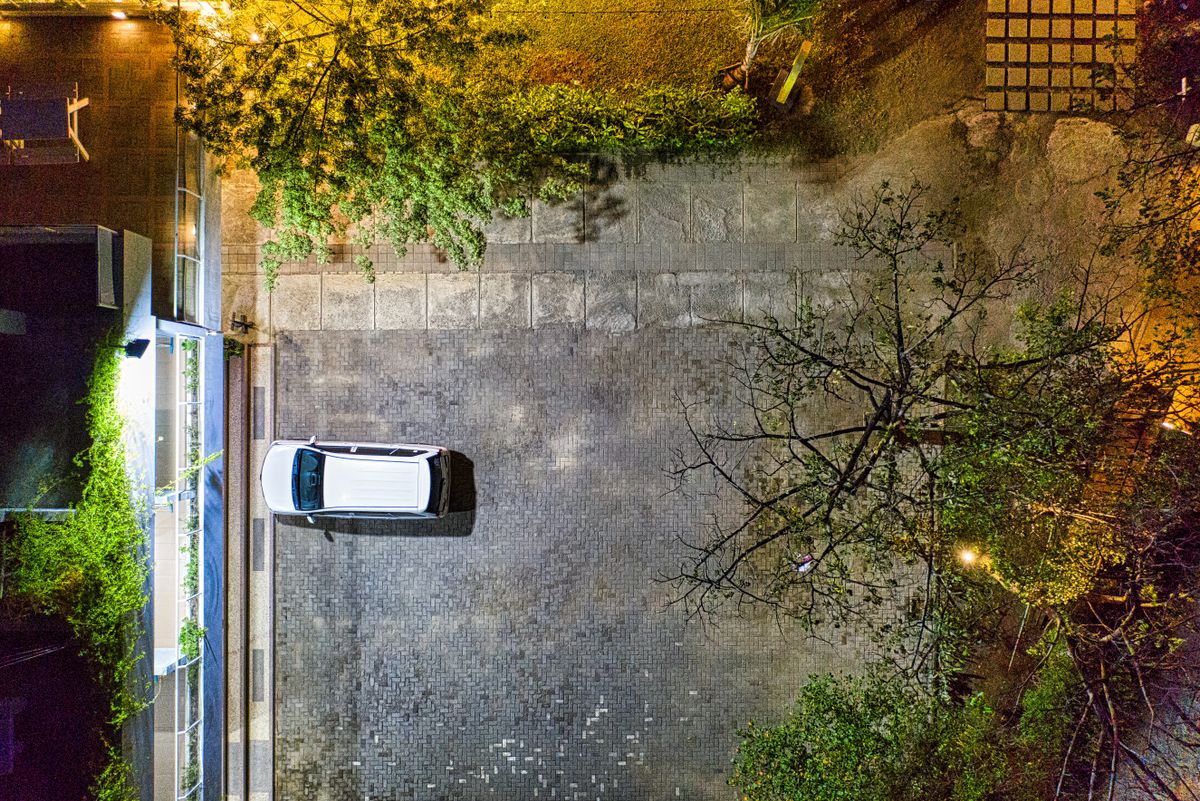
- [ ] Walk the route at dusk and mark every height change and edge.
- [ ] Place one SL5C 5-7 feet from each mark, staggered on long runs.
- [ ] Aim at the nosing or border, not into faces.
- [ ] Save a warm-white Aidot scene; keep RGBTW for events.
- [ ] Give every safety lamp a shade-free panel and a latitude tilt.
- [ ] Recheck after rain, leaf-out, and the first guest night.
Frequently asked questions
Are 350 lumens enough to prevent trips?
Yes when the beam hits the step or edge from 5-7 feet. It is not enough as a distant flood that never grazes the nosing.
Should hazard lights use color so they stand out?
No for nightly use. White shows contrast on wet edges. Color scenes are for parties.
How should steps be lit?
Light risers and landings with overlap. A single lamp at the top leaves the lower treads in the walker's shadow.
Do borders need lights if the path is already lit?
If people catch the border with a foot or a mower in the dark, yes. The border is its own height change.
Is hardwired lighting safer in storms?
A trench does not make a nosing more visible. IP67 solar spots that actually charge will still be on when the walk is wet, with no extra electric cost.
Related reading
Dark-spot, hardwired comparison, and perimeter lighting pages sit next to this hazard FAQ.
- solving dark yard spots with smart solar spotlights
- smart solar spotlights versus traditional hardwired landscape lights
- smart solar spotlight performance for perimeter security
What to do next
Walk every route at dusk and mark steps, borders, and joints. Place Linkind SL5C spotlights 5-7 feet from those edges, staggered, aimed at the height change, with panels in open sky. Save a warm-white Aidot 2.5.0 scene for every night, and treat a lamp that dies early as a hazard to fix, not as a decoration to ignore.
Cover photo by Jonathan Borba on Pexels.